
Plan revealed for £20m industrial research facility in Port Talbot
Plans for a new multi-million-pound industrial research facility in south Wales have been submitted. The proposed facility, named the South Wales Industrial Transition from Carbon Hub, or Switch, would be located in the Harbourside area of Port Talbot if given approval by Neath Port Talbot council, and is a part of the Swansea Bay City deal. It would see the creation of a £20m facility, designed and built by Morgan Sindall Construction, for a purpose-built research centre for de-carbonising the metal and steel industry. The project will be led by Neath Port Talbot council in partnership with Swansea University, with the proposed facility described as being an “open-access centre establishing a collaborative network of expertise across academia, industry and government, aiming to accelerate the region’s transition to net zero”. Once completed, plans say the building will contain a number of facilities such as workshops and welding zones, with mechanical testing zones and laboratory space, as well as offices, reception and breakout spaces for staff. Don't miss the latest news and analysis with our regular Wales newsletters – sign up here for free The plans read: “The new facility is a collaborative innovation centre working with academia, namely Swansea University as a key stakeholder, to help end users from the steel industry to decarbonise the steel industry towards a net zero carbon future. “The core theme of the Switch programme is to assist decarbonisation of the steel and metals industry, to strengthen collaboration between industry and academia and to future-proof the steel and metals industry in Wales and the UK. “The construction will consist of a mix of office space, laboratories, research and production area, storage areas and external works.” The submission, which was received in November, comes just months after the closure of the two blast furnaces at Port Talbot’s Tata steelworks site, which could result in the loss of more than 2,000 jobs. It also comes just weeks after the submission of further plans by Tata Steel for a new £1.25bn electric arc furnace to be built at the site.
Firm behind easy-to-install offshore wind turbine joins university energy and low carbon cluster
A London company which has designed a new type of “low-risk, low-cost, multi-gigawatt” offshore wind turbine has relocated to the East midlands. Offshore Wind Logistics and Construction (OWLC) has moved to a new home in the Advanced Technology Innovation Centre on the Loughborough University Science and Enterprise Park (LUSEP). The team behind the business hope the move will allow it to share innovation and ideas with other companies based there. OWLC was set up as a disrupter to the renewable energy market with the aim of building, operating and maintaining a new type of wind turbine which it says has almost no environmental impact. It says its Gravity Tripod system can offer lower costs thanks to an innovative concrete foundation which can be mass produced and dropped in place without the need for piling. The system, which is suitable for various seabeds, is also said to have a potential lifespan of up to a century. The business also has a consulting arm providing expert support to clients such as turbine owners, developers, suppliers, insurers and certification bodies. Director Matt Bleasdale said: “We're using ATIC as our headquarters – all demonstration project planning, market entry activities, commercial discussions, partnership building, and future innovation will be happening here. “Choosing LUSEP made sense – it’s an excellent location with a vibrant cluster and strong innovation ties, making it an invaluable professional environment. “And, we’ve already derived significant value from being in a like-minded, highly innovative environment.” Loughborough University chief financial officer and LUSEP lead Alex Owen said: “OWLC are a valuable addition to LUSEP’s largest and most established cluster, energy and low carbon, which encompasses early-stage to global organisations, co-located with the University’s world-leading capabilities in net zero and sustainability. “With its distinctive added value of the University’s knowledge base and high calibre graduate workforce, I am confident that LUSEP will be a supportive base for OWLC to flourish.

Birmingham office block to undergo major overhaul
Mia Shaw
A 1980s office building in the heart of Birmingham's business district is to undergo a major facelift which will include the addition of a new roof terrace. Estilo Interiors, which specialises in office fit-out and design, has been recruited to lead the revamp of 35 Newhall Street after plans for the project were first lodged last year.35 Newhall Street, which sits at the corner with Cornwall Street, is six storeys tall and has 70,000 sq ft of space.The planned work comprises the addition of a roof terrace and sky lounge, replacement of the existing cladding with a modern, reconstituted stone cladding, the installation of six electric vehicle charging points in the basement car park and a new 44-space cycle hub with lockers and changing rooms.The existing Newhall Street entrance will undergo a transformation, replacing the current canopy with a portal adorned with perimeter lighting.Andrew Moore, founder and managing director of Estilo Interiors, said: "We are delighted to spearhead the refurbishment of 35 Newhall Street."This project represents a significant step in our ongoing commitment to delivering innovative and sustainable office spaces that meet the evolving needs of today's businesses."Property consultancies Knight Frank and Savills have been appointed as joint leasing agencies for the office space.Jamie Phillips, partner in the office agency team at Knight Frank, said: "35 Newhall Street will, on completion, provide the market with much-needed, high-quality office accommodation which will offer the very highest sustainability credentials and provide occupiers with a best-in-class experience."Ben Thacker, office agency director at Savills, added: "On track for completion next summer, 35 Newhall Street will be delivering a new opportunity that is precisely aligned to the scale, location and quality of workspace that occupiers are seeking in an office market with increasingly limited availability."

Work starts on new business park in the Black Country
Henry Lambert
Work has started on transforming a derelict industrial site in the Black Country into a new business park which is expected to create more than 330 new jobs.Foundry Business Park is being built on 15 acres of land off Brook Street, in Bilston, and will offer a mix of accommodation for small and large companies.Oldbury-based developer Goold Estates has started work on site following confirmation of a £12.5 million investment by the West Midlands Combined Authority (WMCA) to help get the scheme under way.Goold Estates was selected by City of Wolverhampton Council as its chosen developer for the land which it has designated for employment use as part of its wider Bilston Urban Village regeneration project.The WMCA funding is being used in part to cover the cost of cleaning up the site and making it ready for the construction of 15 industrial and distribution units totaling 166,500 sq ft of accommodation to suit a variety of uses.West Midlands Mayor Richard Parker said: "Foundry Park will bring new life to this site and create over 300 much-needed jobs for local people."This modern, environmentally sustainable development will give businesses room to grow and contribute to the community. It will also help tackle a shortage of high-quality workspaces for our region's smaller firms."Investments like this strengthen our local economy and build a solid foundation for future growth that benefits everyone across the West Midlands."Dominic Goold, managing director of Goold Estates, added: "This brownfield site has a complex industrial legacy which has kept it vacant for more than 20 years."It required consultation with a number of third parties to progress the site's development but we are excited to have begun remediation works."Foundry Business Park has the potential to create hundreds of new jobs, secure the future of many firms in the region and attract inward investment."City of Wolverhampton Council leader Cllr Stephen Simkins said: "Bringing this strategically important site forward has been a long-term ambition for the council and I am delighted to see our chosen developer, Goold Estates, start work to create new industrial and distribution units that will deliver hundreds of jobs for our residents.

I'm Looking for a Budget-Friendly Vehicle for My Flower Farm! What Are My Options?
Linda Smith

New property joint venture launches
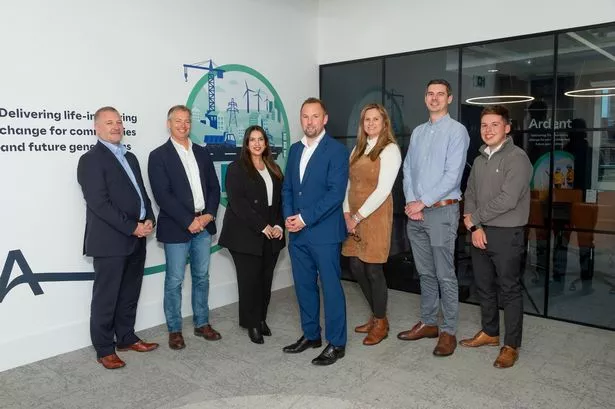
Ardent relocates Birmingham team to new base
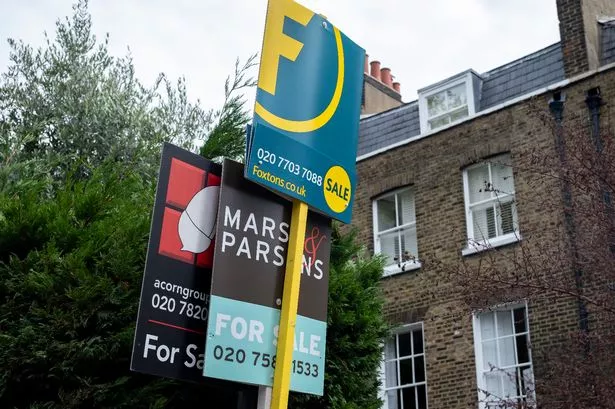
UK house price growth set to return across all regions in 2025

Introducing the Mustang GTD 'Spirit of America': A Luxurious Experience Priced at $325,000
Robert Johnson
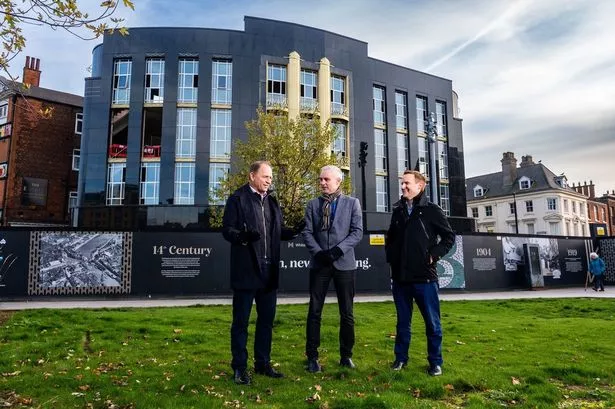
Restoration of Hull's landmark Burton building progresses under Wykeland plans

Luscombe unveils rebrand to mark 50 years in business
A well-known Devon soft drinks producer has unveiled a rebrand to mark 50 years in business. Luscombe said the changes would be made to all packaging, digital platforms, advertising and point-of-sale material next month. Founded in Devon in 1975, Luscombe has evolved from a small family cider producer into one of the UK’s most respected soft drinks brands. The business is based in a valley on Dartmoor in South Devon, where every drink is produced on site by blending organic fruit with Dartmoor spring water. Luscombe was the first drinks brand to gain organic accreditation from the Soil Association in the UK and has since gone on to be awarded a King’s Royal Warrant. Its product range now includes soft drinks, bubblies, juices, ginger beers, crushes and tonics which are sold around the globe. Mr David, who took over and grew the business from his father Julian, said: "Over the past 50 years, Luscombe has been defined by a passion for quality, craftsmanship and sustainability. When I took the reins, I wanted to build on my father’s legacy while creating something truly special. "Seeing Luscombe grow from a small farm-based operation to a multi-award-winning brand has been an incredible journey. Over the years, we have been honoured with Royal Warrants, more than 100 Great Taste Awards and received recognition for our commitment to organic farming and the environment. "It’s a privilege to see how far we have come and I couldn’t be prouder of the reputation we’ve built for exceptional soft drinks made with integrity and care." Scott Cooper, Luscombe’s newly appointed managing director, said the rebrand was a "natural evolution" of Luscombe’s story. "It captures the essence of what makes Luscombe special: our dedication to producing the highest quality soft drinks with a deep respect for nature and craftsmanship," he added. "It modernises our identity while ensuring that Luscombe remains instantly recognisable and trusted by our loyal customers. "As we look ahead, we’re focused on strengthening our position as a leader in the premium soft drinks market, expanding our reach and continuing to innovate while staying true to the values that have made Luscombe what it is today."

Cardiff office market sees strong growth in letting deals and its headline rent level
Cardiff’s commercial office property sector has performed strongly this year with rising letting activity and its headline rent on an upwards trajectory after being stagnant for nearly a decade, shows new research from property consultancy Knight Frank. The firm’s Cardiff Report said the market has benefited for an increasing number of companies expecting employees to spend more time in the office, Its annual report also shows that those seeking office space are becoming more selective, with high-quality, amenity-rich office spaces that support health, well-being, and sustainability objectives foremost in demand. Matt Phillips, head of the Cardiff office of Knight Frank, said: “This occupational realignment is having a profound impact on the property landscape in Cardiff. While there is a plentiful supply of commercial spaces in Cardiff, there is a notable shortage of properties that meet this evolving criteria of active occupiers. “The market is polarising at pace, with new or recently refurbished buildings generating healthy occupier attention. Older buildings lacking significant capital improvements, however, are experiencing greater challenges. Herein lies both the challenge and opportunity for Cardiff.” Knight Frank’s said total office take-up in the city for the third quarter of this year topped 146,000 sq ft - the highest quarterly total since Q4 of 2020. For the year to date a total of 334,500 sq ft has been let - 56% ahead of the equivalent period in 2023 and the strongest first nine months to a year since 2017. So far this year three deals of more than 20,000 sq ft have been completed, the highest for three years, Notably, the average deal size for the year-to-date is 4,711 sq ft, the highest since 2020. The largest deal this year was the Welsh Government acquiring a 51,400 sq ft former Lloyds office building at Cardiff Gate Business Park to support the expansion of the compound semiconductor cluster in South Wales. The other two deals over 20,000 sq ft saw professional advisory firm, PwC taking 33,200 sq ft at One Central Square and Aldemore Bank (via Motonovo Finance)taking 28,100 sq ft at the adjacent Two Central Square. Motonovo has taken space being sublet by law firm Hugh James in the building. Motonovo is moving out of One Central Square, which provides the space for PwC. Mr Phillips said: “So far this year companies originating from the financial services and insurance sectors have been particularly active, accounting for 27% of the total office space take-up. Notably, four out of eight of leasing deals involving spaces over 10,000 sq ft were secured by firms from these sectors.” At the end of third quarter the overall vacancy rate in the core Cardiff city and Bay market was 9.9%, a slight fall compared to the peak of 11% earlier in the year. Inclusive of out-of-town areas, vacancy rates were 11.1 per cent in Q3. Mr Phillips said: “This elevated vacancy rate masks the complete picture. Grade A availability has steadily declined during the year to reach 324,000 sq ft at the end of the third quarter and this meant that the vacancy rate for new and grade A spaces dipped to 3.8%, meaning the gap between total availability and that of ‘best quality’ is now the widest for 10 years.” The report shows that the city’s development pipeline remains limited for those targeting new space. At the end of the quarter, John Street was the only new speculative office development under construction in Cardiff city centre. Being developed by JR Smart, the building is due for delivery by the end of 2025 and will provide 107,000 sq ft of office accommodation with floor plates of 13,000 sq ft. While rents increased in Cardiff during 2024 the gap compared to other regional markets also increased, the research reports. The headline (prime) rent in Cardiff increased to £28 per sq ft, The level was achieved through the letting deal at One Central Square with PwC. The previous headline rent was £25 per sq ft. The average market asking rents also experienced growth, rising to £18.50 per sq ft from £17.50 in 2023. Knight Frank said the upward trend in prime and average rents reflects Cardiff’s competitive market for better-quality spaces. However, despite this uplift, the disparity between Cardiff’s prime rents and those in other UK regional core cities expanded significantly. At the end of Q3 the average headline rent across core cities outside of London stood at £38.00 per sq ft, with the highest rent reaching £48.00 per sq ft in Bristol.

Barbican Centre to undergo £191m regeneration as City of London approves funding package
The City of London Corporation has given the green light to a £191m investment to refurbish and improve the Barbican, the City’s premier cultural and arts hub. The approval for funding was announced yesterday, with plans set to put construction into motion starting in 2027. This hefty sum will cover 80% of the initial phase in the centre's overhaul, with the remaining costs anticipated to be sourced through an extensive fundraising effort set to begin in 2025. The project is timed for completion in honour of the Barbican's 50th anniversary in 2032, as reported by City AM. Chris Hayward, the City Corporation policy chairman, emphasised the importance of the funding: "This funding underlines our support, recognising its unique role as a leading cultural institution and driver of economic growth, contributing £86m a year to the UK economy and supporting around than 1,100 jobs across London." He also added, "The Barbican Centre is central to the Square Mile’s cultural identity and plays a pivotal role in our attractiveness as a place to work and visit." The Barbican refurbishment is one of several initiatives as part of the City Corporation's Destination City initiative, a proposed evolution of the Square Mile aiming to establish it as a prime destination for business, culture, events, and leisure. Jackie Boughton, Director of Commercial at the Barbican, remarked on the significance of this development: "This decision marks a transformative moment for the Barbican Centre and its ability to host world-class conferences and events."

John Lewis scraps staff bonus for third year in a row despite tripling profit
Despite nearly tripling its profit, the John Lewis Partnership has decided to forgo its staff bonus for the third consecutive year. The company, which owns both John Lewis and Waitrose, informed markets that its pre-tax profit surged from £42m to £126m over the 52 weeks to 25 January, as reported by City AM. Total sales increased by three per cent year on year, rising from £12.4bn to £12.8bn, while the firm's operating profit margin improved by 0.9 percentage points to two per cent. John Lewis revealed plans to "step up" its transformation plan this year, supported by a self-funded investment of £600m. This will encompass "store refurbishments and openings, technology upgrades, and supply chain modernisation." The company also intends to invest £114m in staff pay. These two investments mean its annual bonus will be scrapped this year-for the third year in a row. At Waitrose, sales grew 4.4 per cent to £8bn and volumes were up 2.6 per cent. Adjusted operating profit was £227m, up £122m year on year. Sales at John Lewis remained flat at £4.8bn, while adjusted operating profit was £45m. "These are solid results... we have made good progress," Chair of JLP Jason Tarry said. "Looking forward, I see significant opportunity for growth from both our Waitrose and John Lewis brands." Chairman designate Jason Tarry stated: "Our focus will be on enhancing what makes these brands truly special for our customers. This will involve considerable catch-up investment in our stores and supply chain, underpinned by a strong focus on the core elements of great retail, delivered by our brilliant Partners." "I am confident with the transformation momentum in the Partnership, we remain well placed to drive further growth in the year ahead and over the longer term," he continued. Chief Executive Nish Kankiwala, who is set to leave this year after a two-year tenure, commented, "both brands are showing momentum." Kankiwala also stated, "Tripling our profit is a significant testament to the progress of our transformation – focused on delighting customers while continuing to deliver efficiency improvements, thereby laying the foundations for long-term sustainable growth." Julie Palmer, partner at Begbies Traynor, called the results "encouraging." "However, there remains a long road ahead if the retailer is to win back the market share it lost to M&S and other rivals in the battle for Middle England's consumers," she added. "New Chair Jason Tarry is certainly sounding the right notes. The opening of new Waitrose stores, the reintroduction of John Lewis' 'Never Knowingly Undersold' guarantee, and an inflation-beating £114m investment into staff pay, should all bode well for the partnership.
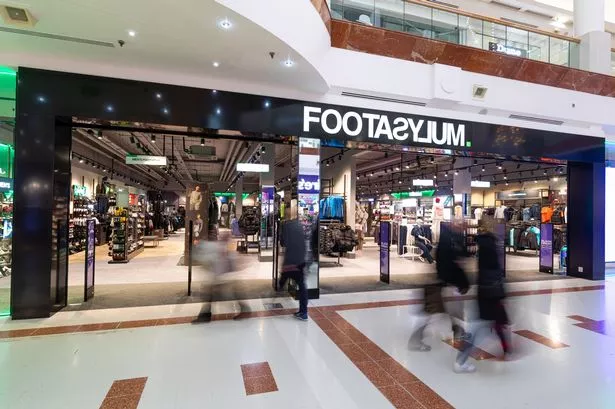
Footasylum expands presence at Merry Hill

Aston Martin at risk of takeover as Canadian billionaire Lawrence Stroll boosts stake

Business hotel near M4 in Swindon put up for sale

Town centre sees 'much-needed' regeneration work begin after traders demand market changes

Belfast proves a strong draw for cruise ships with near-record visits this year

Tesla introduces an updated version of the Model Y in China to compete with local competitors.
Michael Smith
Domino's UK announces new chair and reports mixed financial results for 2024

Midlands to Cornwall flight route announced by Eastern Airways

Plans submitted to develop 330 acres of land next to the seaside town of Skegness

"I brought my Dodge Ram to the Chrysler dealership due to a recall issue, but I was surprised when they billed me $339 for the service."
William Garcia

Italdesign's Quintessenza: A Futuristic Take on the Subaru Brat, Boasting Over 2,000 Horsepower
Elizabeth Johnson

Historic Coventry shop to close after 100 years as owner says 'retail is also not as nice as it used to be'
Latest Articles

Gong Cha: Bubble tea brand to open 225 new UK stores in nationwide expansion

Jeep Meridian Limited (O) 4x4 AT Variant Makes a Comeback: Is This SUV Worth the Investment?
John Jones

Latest apartment complex completes in Birmingham
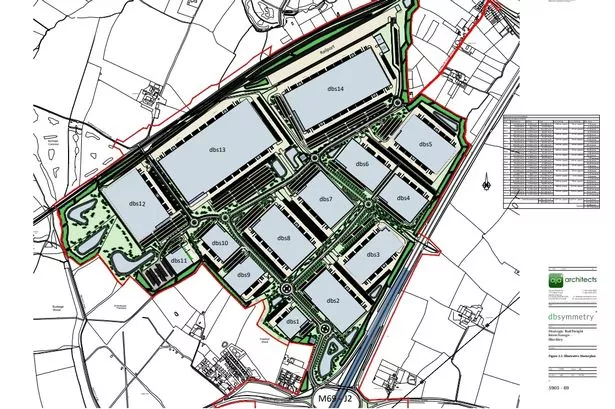
Decision on £550m rail freight hub expected in 2024 – assuming planning inspector doesn’t throw it out sooner
Rolls-Royce shares skyrocket as iconic company brings back dividends
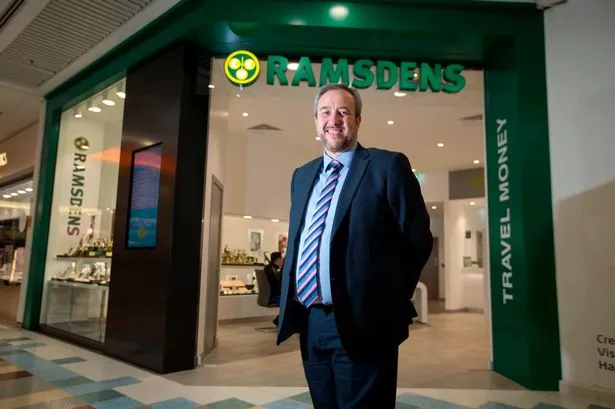
Pawnbroker Ramsdens upgrades profit expectations as high gold prices provide boost

Funding deal for sensor manufacturer

The Latest Béis Sport Collection Is Perfect for Both Your Workout Sessions and Your Upcoming Adventures.
Patricia Garcia

Post-Covid bookings take off again at easyJet