Funding deal for sensor manufacturer

Funding deal for sensor manufacturer

A manufacturer of sensor equipment has secured nearly £800,000 in new funding to help food and beverage clients speed up their cleaning processes. Birmingham-based 4T2 Sensors will use the funding to secure certifications for hazardous environments and hire for key positions. Based on Birmingham Research Park in Edgbaston, 4T2 Sensors has developed a fluid analysis and monitoring sensor which can be used by customers in the food and beverage industry. When these companies switch between products, they have to clean equipment via something called a ‘clean-in-place' process which uses harsh chemicals and large volumes of water. Optimising this process is crucial in reducing downtime, costs and water wastage. 4T2 Sensors' product enables real-time control and optimisation of this cleaning process with claims of a 20 per cent reduction in the time spent. This fresh round of funding will support 4T2 Sensors' market expansion through obtaining certifications alongside hiring product managers, application engineers, and hardware engineers to boost product development and market reach. Chief executive Max Swinbourne said: "This investment is a major step forward in empowering food and beverage manufacturers to achieve significant sustainability gains. "With this investment, we can expand our team and obtain key certifications, positioning 4T2 Sensors to become a leader in sustainable food and beverage production solutions. "We're excited about the future and the positive impact our technology can have on the industry." 4T2 Sensors secured £796,000 worth of capital. This comprised a £249,965 investment from the West Midlands Co-Investment Fund alongside undisclosed funding from US venture capital firm Waterpoint Lane and a group of angel investors. The West Midlands Co-Investment Fund is managed by Birmingham-based venture capital firm Midven. It was launched by the West Midlands Combined Authority and the West Midlands Pension Fund in 2023 to help expand SMEs that have high potential for growth. Rupert Lyle, investment director at Midven and principle of the fund, added: "We're delighted to support 4T2 Sensors as it plays a crucial role in revolutionising sustainable practices within the food and beverage industry.

Packaging firm bought by Coral Products in £500,000 deal with 55 jobs saved

Packaging firm bought by Coral Products in £500,000 deal with 55 jobs saved

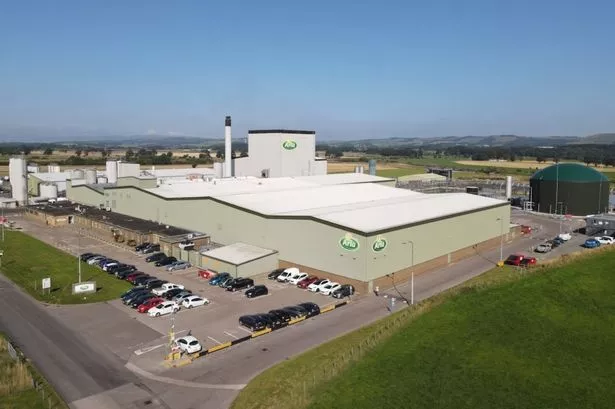
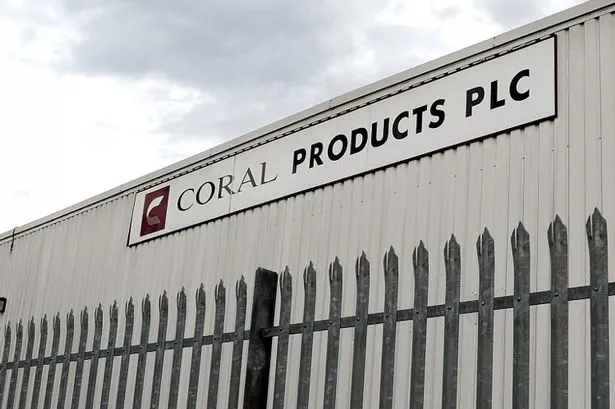
A packaging firm that makes plastic films for supermarkets and the food industry has been bought from its administrators by Manchester’s Coral Products, saving 55 jobs. Plastic and packaging specialist Coral, of Wythenshawe, has agreed to buy the business and assets of Arrow Film Converters from its administrators for £502,899 in cash, through its wholly owned subsidiary Film & Foil Solutions. Coral said it had made an initial cash payment of £202,899, with the outstanding balance to be settled within 14 days following completion. The group said: “The cash payments have been funded without any increase to existing group facilities". Coral’s Film & Foil arm has also agreed to a six-month licence to occupy Arrow’s facility in Castleford, West Yorkshire, as it negotiates a long-term agreement. It has also taken on Arrow’s 55 staff and plans to run the business as a going concern, and has also acquired Arrow’s assets including flexographic printing machines, laminators, and slitting and punching facilities. Arrow is an approved supplier to UK supermarkets. It reported sales of £12.5m in the year to January 2022, £17.9m in the 18 months to July 2023 and current sales demand of around £1m per month. Joe Grimmond, Coral’s non-executive chairman, said "This acquisition propels Film & Foil into the front line of specialist flexible packaging and provides Coral Products plc with capacity toward its medium-term goal of £50 million of production availability."

Ibstock slashes dividends as profit tumbles amid 'subdued market conditions'

Ibstock slashes dividends as profit tumbles amid 'subdued market conditions'

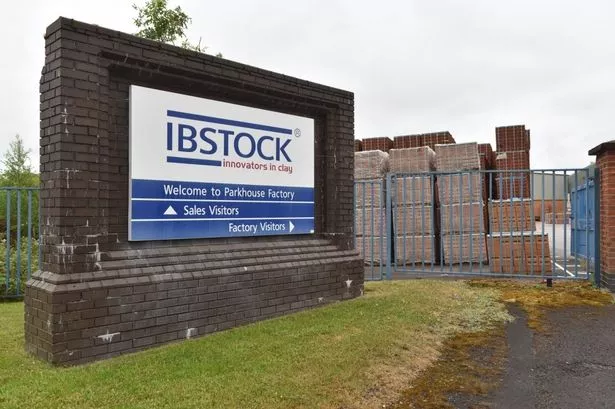
Ibstock, the London-listed brickmaker, has cut its annual dividend payout following a drop in profit and revenue due to "subdued market conditions." The company reported a nearly one-third decrease in pre-tax profit to £21m for the year ending 31 December. Ibstock attributed this figure to a "lower trading performance" and the impact of a one-off £12m charge, as reported by City AM. Revenue fell by 10% to £366m as sales slowed. The group cited a "subdued" market environment for its performance and reduced total dividends by almost half, to 4p per share. Earnings per share also declined year-on-year by 30%, to 3.8p. Despite these challenges, Ibstock noted a gradual improvement in sales during the second half of 2024 and maintained a positive outlook for 2025. "We expect an improvement in market volumes in 2025, with momentum building through the year," said Chief Executive Joe Hudson. "Ibstock is well-positioned for a market recovery, and the fundamental drivers of demand in our markets remain firmly in place." He added: "We see a significant opportunity for a new era in housebuilding in the UK and with the investments we have made and our market leadership positions, the group remains well placed to support and benefit from this over the medium term." "Shares have fallen around 14% so far this year, and the firm will also have to contend with a 21% year-on-year increase in its debt pile, which currently stands at £122m." Hudson described the 2024 performance as "resilient."

Cranswick beefs up margins targets as it partners with Sainsbury on £61m project

Cranswick beefs up margins targets as it partners with Sainsbury on £61m project

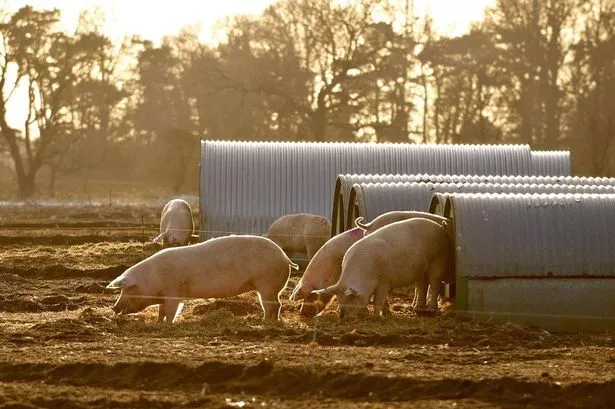
Meat producer Cranswick has upgraded profit targets following a strong fourth quarter of demand for its pork and poultry products. The Hessle-based supplier to major supermarkets has beefed up medium term operating margin ambitions from 6% to about 7.5% as it said it was on target to meet adjusted pre-tax profit expectations of between £190m-£195.1m. Cranswick, which is celebrating its 50th year, gave the update ahead of preliminary results for the year to March 29, and as part of a capital markets day. Simultaneously, key customer Sainsbury's announced a £61m partnership with the firm that will see Cranswick supply all British pork, sausages, premium bacon and gammon, and cooked meats to its shelves. The 10-year agreement also includes measures to raise welfare standards of the by Sainsbury's British pork range. It includes direct investment in flexible farrowing accommodation, where pigs are housing during birthing. AI technology will also be used for 24/7 monitoring of the animals. It is estimated Sainsbury’s will invest £50m to implement the measures by 2030, with an additional £11m coming from Cranswick to help build the new sheds and housing for the pigs. Jim Brisby, Cranswick's chief commercial officer, said the partnership will provide a secure supply chain "fit for the future" and support a fair return to more than 170 farmers. He also added the contract would give the firm confidence to invest in its farms, processing factories and people. On the upgraded trading ambition, Adam Couch, CEO of Cranswick, said: "We are also announcing today more ambitious medium-term financial targets, reflecting the significant strategic progress we have made since first introducing these measures.

More than 400 jobs lost as metalwork operation collapses only months after rescue

More than 400 jobs lost as metalwork operation collapses only months after rescue

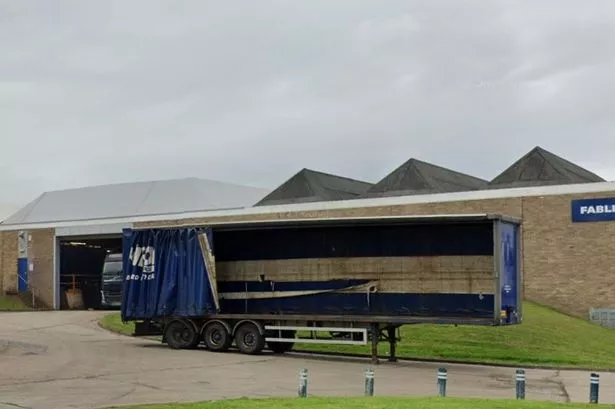
A metalwork firm that employed hundreds of people in the North East, Midlands and South East has collapsed only months after it was rescued in a pre-pack administration deal. In September, Fablink Group was acquired in a near £3m deal by investors Praetura Commercial Finance and TDC Impact Limited, which backed director Richard Westley in a new venture called Wharfside Industrials. Administrators at the time hoped a string of pre-pack deals involving eight group subsidiaries had safeguarded the future of the business, which specialised in metal pressings, cab assemblies and fuel tanks, and operated from bases in County Durham and Wolverhampton, Luton and Northamptonshire. But in the intervening months the business lost contracts with several key customers and now administrators from EY have been appointed. The majority of the group's 427 staff, including around 200 in County Durham, have been made redundant while joint administrators Lucy Winterborne and Dan Hurd explore a sale of certain parts of the group and its assets. September's collapse of the group came in the wake of a problematic few years for Fablink in which £5m Government grant funding for the relocation of its Wolverhampton site is said to have failed to materialise. It also suffered a £1.5m bad debt following the insolvency of an electric vehicles customer in 2023. There were also pressures from a quality issue relating to cabs produced for a key customer that resulted in increased production costs and lost sales. Administrators also talked of burdensome costs related to an electric vehicles contract where volumes had been smaller than expected. Early last year, main lender HSBC brought in insolvency and restructuring specialists Interpath to review the firm's short-term cash flow and by March, work was under way to find a buyer and assess restructuring options. Under significant pressure from creditors, only one offer was made, from the buyers Praetura Commercial Finance and TDC Impact. About £1m of the £2.95m offer was still due to be paid in instalments leading up to September 2025. Documents show that at the time of its administration in September, the group owed trade creditors more than £2m. An overall deficit of £14.4m was also reported. A statement from the administrators at EY said: "The group was acquired out of administration in September 2024, but since then it has unfortunately lost the business of certain key customers. The group’s management team has worked tirelessly to find a viable solution to rescue the business, however, the significant loss of business has severely impacted the group’s future viability. As a result, the directors have determined that they have no option other than to place the group into administration.

Newcastle College launches £850k advanced manufacturing skills facility

Newcastle College launches £850k advanced manufacturing skills facility

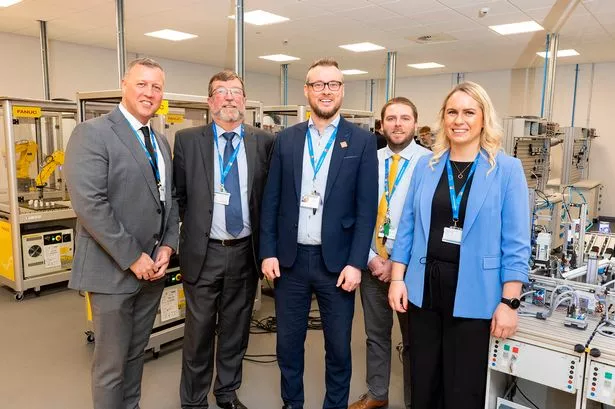
Leaders from some of Tyneside's top manufacturing and engineering companies have attended the launch of Newcastle College's new Advanced Manufacturing Suite. Delegates from firms such as Siemens Energy, Baker Hughes and Shepherd Offshore were shown the newly kitted out facility at the college's Rye Hill Campus, where cutting edge technology including robotics, 3D modelling equipment and CNC machines have been brought in to train students who could go on to careers in advanced manufacturing. About 500 students per year are expected to pass through the facility, which upgraded existing classroom and workshop space at the college, under the direction of an employer advisory board. Newcastle College principal Jon Ridley said the move is in response to consultation with industry about future skills needs, and part of a wider investment strategy across city centre campus, its Aviation Academy at Newcastle International Airport and its Wallsend-based Energy Academy, where students are trained for subsea and renewable energy industries. The new Advanced Manufacturing Suite will also be used to upskill local workers. He said: "At Newcastle College our courses are designed in collaboration - we co-create - with employers. So where employers are talking about the kit and equipment that's needed - we go out and purchase that equipment. "The difference in being a student at Newcastle College and a student at sixth form or a university, is experiential. It's about practicing and honing the skills on the kit." The array of workshop equipment supplied by Mach Machine tools spans different sub-sectors of advanced manufacturing with the college hoping to turn out workforce-ready candidates who can use the type of machinery and systems found on the workshop floor at local employers. Learners will have the opportunity to program robotic arms of the kind found on production lines and get to grips with precision milling machines used by component manufacturers. Overall, the investment in the machinery together with building work and IT required alongside it is worth £3m. Mr Ridley said the suite is intended to blend theory and applied learning - breaking traditional barriers between classrooms and workshop. He added: "It's 100% for the region and that's the thing about Newcastle College, we do have a large number of 16-18 year-olds and there are about 13,000 students here per year. "Only about 6,500 of those are kids and the rest are adults, and of those adults you've got people looking to retrain, re-skill and up-skill to enhance their careers. So to meet the region's ambitions, facilities like this are going to be the engine of that ambition."

Aston Martin announces job cuts of 170 staff as part of cost-saving measures

Aston Martin announces job cuts of 170 staff as part of cost-saving measures

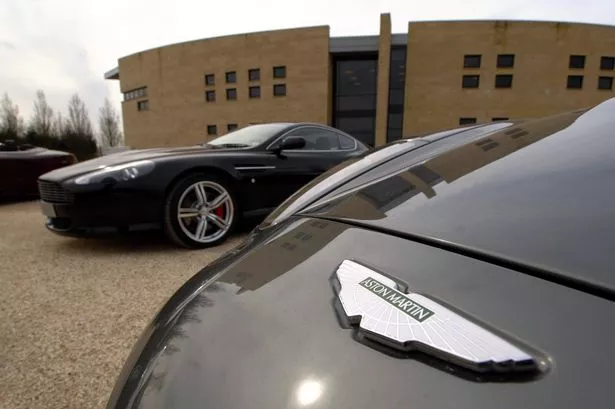
Luxury vehicle manufacturer Aston Martin has announced plans to slash 170 jobs as part of a cost-cutting strategy aimed at reviving its faltering share price. The proposed cuts represent five per cent of the company's global workforce and are expected to yield savings of around £25m, as reported by City AM. The announcement comes on the heels of Aston Martin, which has its HQ in Gaydon and a factory at St Athan in South Wales, reporting an expanded full-year loss of £289.1m and a three per cent dip in revenue, which totalled £1.58bn. In recent times, the brand has been wrestling with a series of supply chain and production challenges that have contributed to a mounting debt burden. Debts surged by 43 per cent to £1.16bn in 2024, while shares plummeted by approximately a third. Free cash outflows also increased by nine per cent during the same period, reaching £392m. "After a period of intense product launches, coupled with industry-wide and company challenges, our focus now shifts to operational execution and delivering financial sustainability," declared the firm's newly appointed CEO, Adrian Hallmark. He continued: "I see great potential in Aston Martin, and our goal is to transition from a high-potential business to a high-performing one, better equipped to navigate future opportunities and uncertainties. He added: " Hallmark concluded by saying: "We have all the vital ingredients for success, with the support of strategic shareholders, the capability of world-class technical partners, a revitalised brand, talented people, and the strongest product portfolio in our 112-year history." However, Aarin Chiekrie, equity analyst at Hargreaves Lansdown, has highlighted some concerns stating: "The group had to go cap in hand to investors twice last year, seeking additional funds to help keep the wheels turning." He warned that the possibility of a further cash call isn't off the table as he pointed out, "A further request for funds can't be ruled out given cash flows remain in negative territory." Chiekrie also mentioned that though reducing staff numbers is a step taken, it's only "part of the puzzle, as costs can only be cut so far."

Jaguar Land Rover reveals scale of Donald Trump's tariffs with US sales figures

Jaguar Land Rover reveals scale of Donald Trump's tariffs with US sales figures

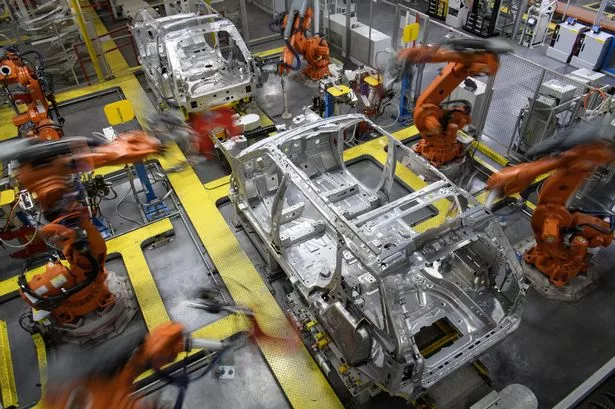
The impact of Donald Trump's tariffs on Jaguar Land Rover has been brought to light as the luxury car manufacturer detailed its vehicle exports to the US for the first quarter of 2025. The Coventry -based automotive giant reported a 14.4% increase in wholesale volumes in North America during its fourth quarter, as reported by City AM. This information comes following Jaguar Land Rover's announcement over the weekend that it will "pause" shipments to the US while it adjusts to "address the new trading terms" that have arisen as a result of Donald Trump's tariffs. The US administration enforced a 25% tariff on all foreign cars starting Thursday, complemented by a broader "baseline" tariff of 10% on goods imported globally which commenced on Saturday morning. In a statement issued on Saturday, a spokesperson for Jaguar Land Rover commented: "The USA is an important market for Jaguar Land Rover's luxury brands." They added, referencing their response to the tariffs: "As we work to address the new trading terms with our business partners, we are taking some short-term actions including a shipment pause in April, as we develop our mid- to longer-term plans." The details of US wholesale figures come ahead of Jaguar Land Rover releasing a comprehensive set of data before its full-year results for the 12 months up to the end of March 2025, which are expected to be announced in May. In its most recent quarter, the group's wholesale volumes, excluding the Chery Jaguar Land Rover China joint venture, reached 111,413 vehicles. This represents a 6.7% increase compared to the previous three months and a 1.1% rise year on year. When compared to the previous year, wholesale volumes in Europe increased by 10.9%, while in the UK they remained flat at 0.8%. However, the group experienced a significant 29.4% decline in China, and overseas sales fell by 8.1%. Retail sales for the fourth quarter, including the Chery Jaguar Land Rover China joint venture, totalled 108,232 vehicles. This is a decrease of 5.1% compared to the same quarter last year but an increase of 1.8% compared to the preceding three months.

Versarien completes sale of South Korean factory for more than £600k

Versarien completes sale of South Korean factory for more than £600k

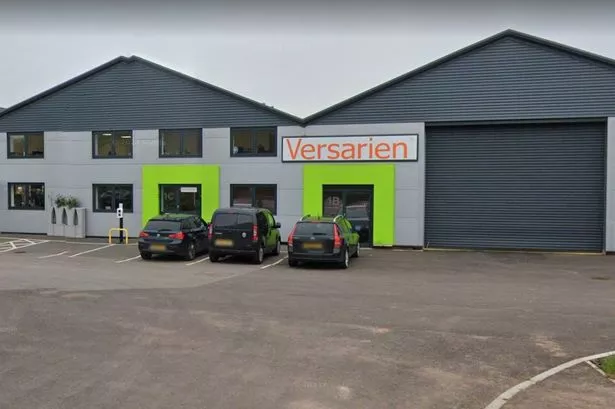
Gloucestershire-based engineering firm Versarien has completed the sale of its South Korean factory and equipment for more than £600,000. The agreement with MCK Tech was announced last March as part of a strategy to monetise intellectual property (IP) through licensing. The transaction was meant to complete last July, but was delayed after MCK Tech asked for an extension to the deadline. Longhope-based Versarien has now received the final payment of £92,000, plus accrued interest, it announced on Monday (March 3). In total, Versarien has received £611,000 after a £6,000 warranty deduction from MCK Tech for its Korean plant and equipment. Under the terms of the deal, AIM-listed Versarien has granted an exclusive licence to MCK Tech for an initial period of five years, to use five patents owned by the firm in their business in Korea. MCK Tech will pay Versarien an amount equal to 4.5% of the total sales revenue earned from products manufactured using the IP. If the sales revenue derived from the IP is less than £250,000 over the first two years, the licence will terminate and MCK Tech will pay Versarien £40,000 for use of the IP. In June, Versarien said it was “optimistic” about the future after reporting a narrowing of losses. In a set of unaudited interim results, the firm reported pre-tax losses of £1.77m - down from £3.4m the year previously - for the six months ended March 31, 2024. In December, the company revealed its Spanish subsidiary has secured a €804,000 grant. Versarien said at the time that the money would be used by Gnanomat to finance a two-year project relating to a high-tech energy storage devices. Versarien also signed an agreement with infrastructure group Balfour Beatty last year to develop a range of low-carbon, graphene‐infused, 3D‐printable mortars for civil construction.

60 jobs at Cornwall dairy factory under threat

60 jobs at Cornwall dairy factory under threat

A major UK cheddar cheese supplier is considering axing some 60 roles at its dairy factory in Cornwall. Saputo Dairy UK, which manufactures brands such as Cathedral City and Wensleydale, is looking to reduce its workforce by 80, with the majority of jobs being cut at Davidstow Creamery, near Camelford. The company told Business Live it was proposing to stop making a number of ingredients for the baby formula market and instead return to producing sweet whey powder. The proposed job cuts will have no impact on the supplying farms or cheese production, it added. "We will consequently be entering into a period of consultation with a group of employees regarding these proposed changes," a spokesperson said. "Market conditions are such that we are having to take difficult, but decisive, actions to simplify the business and introduce meaningful efficiencies to ensure we are best placed for the future. "We will ensure that all employees who may be impacted by this proposal are well supported." Saputo Dairy UK has manufactured ingredients for the infant formula market since 2013, but said on Thursday (April 3) that demographic shifts and changes in demand for different whey formats mean it was no longer in the company's "best economic interests" to continue servicing that market. The changes are expected to be completed by the end of September 2025. Dairy Crest was acquired by Saputo, one of the top dairy processors in the world, in 2019 and rebranded as Saputo Dairy UK. In 2021, Saputo snapped up Wensleydale Creamery, which manufactures, blends, markets and distributes a variety of specialty and regional cheeses, including Yorkshire Wensleydale cheese. In 2022, the company launched Cathedral City Plant Based - a dairy-free alternative to cheese.

Donald Trump tariffs: JLR says it will be 'resilient' as UK automotive sector braces for impact

Donald Trump tariffs: JLR says it will be 'resilient' as UK automotive sector braces for impact

The luxury car giant behind Jaguar and Range Rover says it is confident its business will be “resilient” despite Donald Trump’s new 25% tariffs on automobiles. The US president has imposed a 10% tariff on US imports of UK goods, rising to 25% for cars. Mike Hawes, chief executive of the Society of Motor Manufacturers and Traders (SMMT), called the news “deeply disappointing and potentially damaging”. The USA is a key market for JLR, formerly Jaguar Land Rover. Last year JLR chose Miami Art Week to launch its Type 00 Jaguar concept vehicle. The car was designed with a theme of “Exuberant Modernism” and the company says it is “a concept with bold forms and exuberant proportions to inspire future Jaguars”. JLR’s North American business is based in Mahwah, New Jersey, and its LinkedIn page says the company “is represented by more than 330 retail outlets”. Analysis this week from the Institute for Public Policy Research (IPPR) showed more than 25,000 direct jobs in the UK car manufacturing industry could be at risk under the new tariff regime as exports fall. And the IPPR said employees at Jaguar Land Rover and Mini were set to be among the most exposed. In a statement, JLR said: “Our luxury brands have global appeal and our business is resilient, accustomed to changing market conditions. Our priorities now are delivering for our clients around the world and addressing these new US trading terms.” In January, JLR posted a pre-tax profit of £523m for the final three months of 2024, down from the £627m reported during the same period in 2023, as reported by City AM. But its pre-tax profit for the 12 months to date stood at £1.6bn, a 7% year-on-year increase. Also in January, JLR said it was investing millions of pounds in new paint facilities at its Castle Bromwich site to help it meet demand for personalised luxury vehicle, where customers pick from hundreds of bespoke paint options across its Range Rover and Range Rover Sport models In September, JLR announced plans for a £500m investment at its Halewood factory in Merseyside to turn it into the “electric vehicle factory of the future”. Mike Hawes from the SMMT said: “The announced imposition of a 10% tariff on all UK products exported to the US, whilst less than other major economies, is another deeply disappointing and potentially damaging measure. “Our cars were already set to attract a punitive 25% tariff overnight and other automotive products are now set to be impacted immediately. “While we hope a deal between the UK and US can still be negotiated, this is yet another challenge to a sector already facing multiple headwinds. “These tariff costs cannot be absorbed by manufacturers, thus hitting US consumers who may face additional costs and a reduced choice of iconic British brands, whilst UK producers may have to review output in the face of constrained demand. 15 stunning pictures of Jaguar's new electric vehicle as Type 00 is launched in Miami “Trade discussions must continue at pace, therefore, and we urge all parties to continue to negotiate and deliver solutions which support jobs, consumer demand and economic growth across both sides of the Atlantic.” Dr Jonathan Owens, operations and supply chain expert at the University of Salford, said: “While the tax on parts might not take effect until May, the new US tariff import policy imposing a global 25% tax on fully assembled and saleable vehicles has already begun. For vehicles already in the supply chain to the US from the UK and other global destinations, automotive manufacturers will probably have to take the hit short-term for the increases as the price negotiations have been completed. “However, if the global US tariff becomes a permanent fixture by the Trump administration, automotive companies will not be able to carry the long-term burden of the increased costs. This will become more noticeable when the tariff tax is expanded to the parts supply chain. The assembly of a vehicle requires parts coming into a centralised manufacturing plant, however there will also be decentralised smaller plants and suppliers offering specialised services. Subsequently, component parts in the assembly may cross multiple borders accumulating tariff costs. So, when the tariff on parts takes place, it will only further increase the cost of the vehicle. “We should also consider this was attempted in Trump’s first presidential office to protect US steel jobs, with a 25% global tariff on imported steel. However, this resulted in a lower job tally of 80,000, compared to the 84,000 it had been in 2018. “Will it last and is the UK right not to retaliate immediately? The US public will not be isolated to these increases due to the supply chains. If US manufacturers are to bring everything in-house, it would take many years and not everything can be sourced within the US. The US citizen could soon find the price of locally made cars increasing and the option to buy cheaper imports has also become too expensive. The situation is far from ideal for a nation who like their cars.”

Liverpool and Greater Manchester will have 'key role in global space economy' thanks to landmark deal with Axiom Space

Liverpool and Greater Manchester will have 'key role in global space economy' thanks to landmark deal with Axiom Space

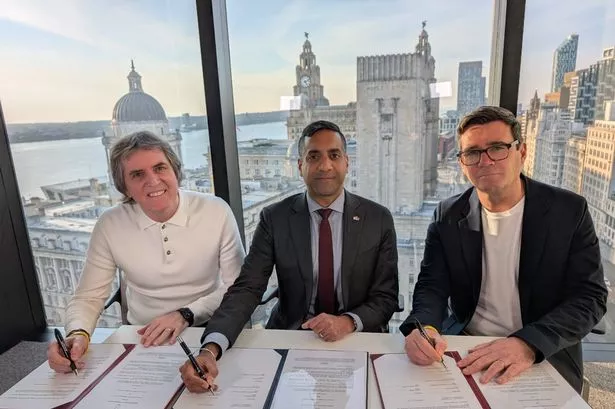
The North West is set to play a major role in the global space economy, following a landmark agreement between Mayor Steve Rotheram and his Greater Manchester counterpart Andy Burnham with Axiom Space - the developer of the first commercial space station. The Memorandum of Understanding (MoU) will lay the groundwork for collaboration on space-based research, development, and manufacturing, with the aim of positioning the North West as a global hub for innovation in microgravity science and space technology. Tech firms are investing in in-space manufacturing they say could bring about a revolution in industries worldwide. Now, the North West is poised to take a leading role in this rapidly expanding sector, which is projected to be worth £490 billion globally by 2030. The agreement signed this week builds upon discussions between Mayor Rotheram and British astronaut Tim Peake, a strategic advisor to Axiom Space, as well as conversations between Axiom and Mayor Burnham at the South by Southwest festival in 2023. Mr Peake has been a strong advocate for the UK's potential in space-based innovation and has supported efforts to link scientific research and commercial opportunities with UK regions, reports the Liverpool Echo. Axiom Space, a leading provider of commercial human spaceflight services, is not only facilitating missions to the International Space Station (ISS) but also pioneering the world's first commercial space station, Axiom Station. The company is fuelling innovation and research in microgravity and crafting advanced spacesuits for lunar and low-Earth orbit missions. Steve Rotheram, Mayor of Liverpool City Region, said: "For centuries, our region has been at the forefront of innovation-from the world's first passenger railway to breakthroughs in modern medicine. Now, we're looking to space as the next great frontier for our expertise in advanced manufacturing materials science, and biotech. "This collaboration with Axiom Space puts us at the cutting edge of a global industry that's predicted to be worth nearly half a trillion pounds within the decade. The Liverpool City Region has the talent, ambition, and infrastructure to lead the way, attracting investment, creating high-skilled jobs, and ensuring that space-based research delivers real-world benefits for people and businesses here on Earth." Andy Burnham, Greater Manchester Mayor, added: "This collaboration with Axiom Space is a great example of what can be done when our City Regions work together to drive growth. "Space is one of the UK's fastest growing sectors, and Greater Manchester is perfectly placed to lead this innovative work, with our strengths in advanced materials and manufacturing, life sciences, AI and Data. The expertise in our universities, digital sector, and manufacturing and engineering firms mean that we can seize this opportunity to create highly skilled, well paid jobs across our city region." Axiom Space's chief revenue officer, Tejpaul Bhatia, said: "Axiom Space is developing Space-based infrastructure that will create new markets and economic opportunities around the world. "This includes orbital data centres that will facilitate new capabilities in telecommunications, Earth observation and data analytics, cybersecurity, and artificial intelligence, orbital laboratories that will unlock innovations in microgravity with the potential for scientific breakthroughs across various industries, and orbital factories that will leverage the environment of Space to manufacture pharmaceuticals and materials otherwise not possible on Earth. "Moreover, Space-based infrastructure like orbital data centers supports terrestrial sustainability by utilizing unlimited solar power, cooling, and real estate in Space, offsetting long-term strains on those limited terrestrial resources. We are thrilled to collaborate with the UK to leverage Space-based infrastructure to empower regional economies, stimulate job creation, and boost global competitiveness." The Memorandum of Understanding says the collaboration will concentrate on space-based communications, artificial intelligence and cybersecurity, environmental surveillance and disaster management utilising satellite technology, microgravity research in biotechnology and medicine, as well as in-space manufacturing for advanced materials and novel products.

Rolls-Royce shares skyrocket as iconic company brings back dividends

Rolls-Royce shares skyrocket as iconic company brings back dividends

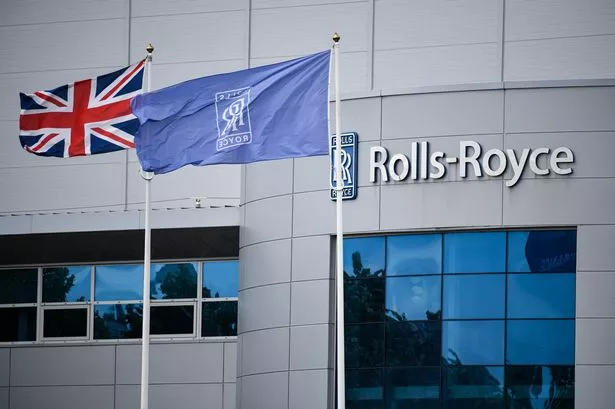
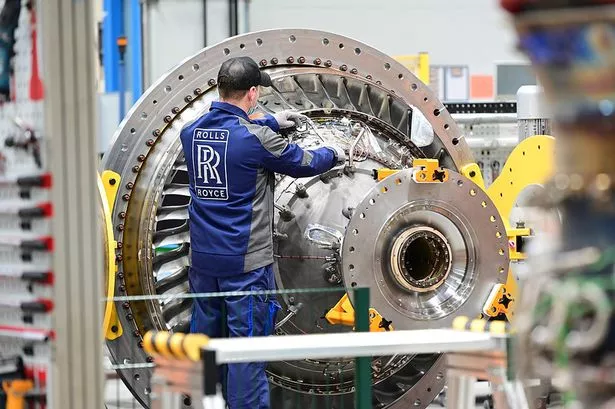
Rolls-Royce has announced the reinstatement of dividends and launched a £1bn share buyback programme as its full-year profit significantly exceeded expectations. The FTSE 100 engineering behemoth, which has major UK sites in Derby and near Bristol, proposed a 6p per share dividend for investors on Thursday, marking its first payout since the onset of the pandemic, as reported by City AM. A £1bn share buyback scheme will also kick off immediately and run through 2025, according to a market statement. Shares surged over 14% in early trading as investors eagerly jumped aboard. This comes as underlying profit hit £2.5bn, comfortably surpassing a previous forecast of between £2.1bn and £2.3bn. Revenue of £17.8bn also outperformed analysts' consensus of approximately £17.3bn. Following this impressive performance, Rolls-Royce has raised its medium-term targets for profit and free cash flow. Underlying operating profit is now projected to land between £3.6bn and £3.9bn by 2028, while free cash flow is anticipated to range from £4.2bn to £4.5bn. "We are moving with pace and intensity," stated CEO Tufan Erginbilgic, who has spearheaded a remarkable turnaround in his first two years at the helm. He continued: "Based on our 2025 guidance, we now expect to deliver underlying operating profit and free cash flow within the target ranges set at our Capital Markets Day, two years earlier than planned." He concluded: "Significantly improved performance and a stronger balance sheet gives us confidence to reinstate shareholder dividends and announce a £1bn share buyback in 2025." Rolls-Royce's shares have seen a significant uptick since Erginbilgic took the helm in January 2023, driven by a potent mix of soaring travel demand and geopolitical tensions fuelling orders for its jet engines and defence technology. The company's stock price has nearly doubled over the past year and increased almost sixfold over the previous two years. "The group's turnaround has been so impressive that some of its 2027 guidance has been hit two years early, causing the group to upgrade its mid-term guidance," commented Aarin Chiekrie, an equity analyst at Hargreaves Lansdown. "Revenues are being boosted by the upward trend in engine-flying hours, which are now cruising above pre-pandemic levels. But that's just one part of the puzzle."

Cycling accessories firm secures funding to expand Bristol HQ

Cycling accessories firm secures funding to expand Bristol HQ

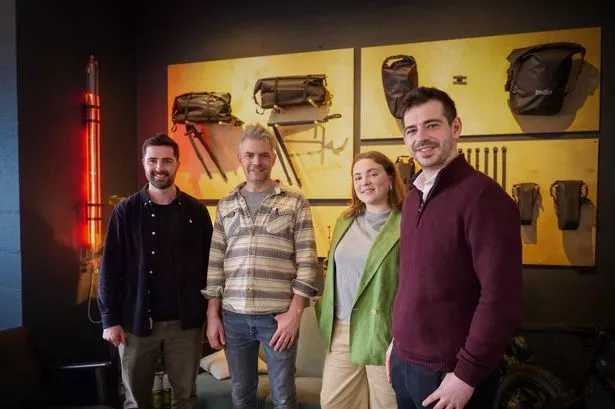
A Bristol cycling accessories designer and manufacturer has secured £600,000 to fuel its expansion plans. Tailfin, on Cumberland Road, is part of the rapidly-growing 'bikepacking' market - an adventure-focused cycling discipline where cyclists carry all necessary gear on their bikes. The company was founded a decade ago by Nick Broadbent, a mechanical engineer and product designer, and initially focused on rack and pannier accessories. Today, Tailfin has more than 12 product lines distributed from warehouses in the Netherlands, US, and Europe. The business will use the additional working capital from the British Business Bank's South West Investment Fund, and delivered by fund manager FW Capital, to broaden its product range, it said. Significant investment is also being directed towards expanding the company's Bristol headquarters, creating a state-of-the-art R&D studio with new equipment, specialised tools, and enhanced prototyping capabilities. Extra funds will also be used to invest in high-quality video production equipment and a dedicated studio space, Tailfin added. Mr Broadbent said: “This investment marks a significant milestone for Tailfin, enabling us to push the boundaries of design and technology further and to enhance our robust intellectual property portfolio, which already includes over 20 patents. "Crucially, it also supports our growth strategy by enabling us to expand both our innovative product lines and our talented team of passionate cycling enthusiasts.” Tailfin's Bristol headquarters houses a team of 25 designers, marketers, and operational specialists, collaborating with specialist manufacturing partners across China, Vietnam, and Taiwan. Jordan Berg represented FW Capital and led the deal. He said: “Tailfin is a premium quality brand in the bikepacking world that have created an innovative range of products that appeal to all cyclists from commuters, adventure cyclists to world-class ultra endurance athletes. Nick’s vision to bring his products to market is very impressive and the success Tailfin has enjoyed is testament to that." The South West Investment Fund provides loans from £25k to £2m and equity investment up to £5m to help small and medium-sized businesses to start up and scale up. Fund manager FW Capital provides debt finance using the South West Investment Fund to businesses in Bristol, Gloucestershire, North and North East Somerset and Wiltshire. Lizzy Upton from the British Business Bank added: “The South West Investment Fund was created to support ambitious businesses like Tailfin, helping them scale, innovate, and strengthen their market position."

South West bucks UK manufacturing decline as aerospace and defence firms report 'strong' start to 2025

South West bucks UK manufacturing decline as aerospace and defence firms report 'strong' start to 2025

Aerospace and defence firms in the West of England are experiencing "very strong demand" for business, bucking a wider UK decline in manufacturing, according to a new report. Manufacturers across the region have reported a strong start to the year, the survey by national manufacturing body Make UK and business advisory firm BDO found. Both output (+32%) and orders (+39%) were positive, with the forecast set to improve further in the next quarter. As a result, companies are looking to hire more staff with recruitment intentions increasing from +5% to +21% over Q2, the report said. Capital expenditure plans are also significantly ahead of the national picture at +32%, while the South West's renewable energies sector is also seeing strong demand. Nationally, Make UK is forecasting that British manufacturing will contract by -0.5% in 2025, down from a forecast of -0.2% in the last quarter, before growing by 1% in 2026. Matthew Sewell, head of manufacturing at BDO in the South West, said: “The economy in the South West relies heavily on manufacturing, in particular the strength of the aerospace, defence and renewable energy sectors . It’s encouraging to see the region have a strong start to the year, but we cannot be complacent - our manufacturers are resilient but they’re not invincible. “Manufacturers across the South West now need targeted support from government, whether that be reducing complexity, streamlining trade or boosting access to capital to enable them to focus on growth.” Make UK is now calling on the government to bring forward a long-term industrial strategy with advanced manufacturing "at its heart" to help grow the economy. Keri Anne Mruk, region director at Make UK in the South, said: “This has been a strong start to the year for manufacturers in the South West with the region bucking the national picture. "To build on this it’s now essential that Government brings forward an industrial strategy at the earliest opportunity. This will give manufacturers the confidence to plan for the future with a stable, supportive policy environment.”

Major manufacturer TT Electronics warns US tariffs 'could cast doubt' on trading ability

Major manufacturer TT Electronics warns US tariffs 'could cast doubt' on trading ability

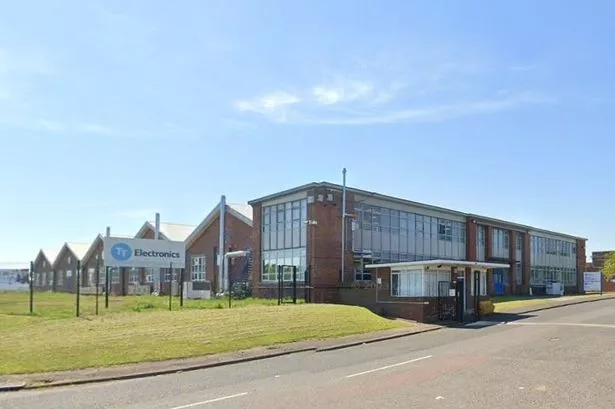
An electronics manufacturer has warned that US tariffs could impact its ability to keep operating. TTE Electronics has bases in Asia, North America and five sites around the UK alongside its Woking headquarters, including a facility in Bedlington specialising in R&D and semiconductors. New results show strong performance in Europe and the UK was offset by slumping demand in the US. Overall, it chalked up £521.1m in revenues, down from £613.9m. The previous year’s operating profit of £3m was converted to a loss of £23.5m. The Stock Exchange-listed business, which engineers and manufactures products to support sectors from healthcare to aerospace, posted a pre-tax loss of £33.4m for 2024, and said the import taxes and retaliatory measures had led to an “uncertain and volatile” backdrop. In the UK, the firm has nine bases including sites in Abercynon, Bedlington, Fairford, Eastleigh, Nottingham, Sheffield, Manchester, and Barnstaple, having divested its sites in Hartlepool and Cardiff during the year. Its Bedlington base, founded in 1937, has 414 employees helping to produce microelectronics and resistors used by global manufacturers in the aerospace and defence markets. It has previously warned of difficulty in its US branch, with falling demand for the components it produces and ongoing production issues at its factories, which have led to it booking a £52.2m write-down. The first half of the year also saw 500 redundancies in its North America operations, which it expects to result in £12m of annual cost savings. Bosses warned that the recent US global tariffs, leading to retaliatory charges from some countries including China, had led to an “uncertain and volatile macroeconomic backdrop which could have an impact beyond that assumed in the severe downside case”. That means conditions could worsen beyond its worst-case scenario, particularly if US customers cut back on orders, which could impact its ability to keep operating and being profitable in the year ahead. It said: “The board is mindful of the increased market uncertainty arising from the recently announced trade tariffs and the potential impact on demand patterns. The recent introduction of US global tariffs and certain retaliatory tariffs provide an uncertain and volatile macroeconomic backdrop which could have an impact beyond that assumed in the severe downside case. "This has led the board to conclude that it is not possible to be certain of meeting the covenant test in certain extreme scenarios, in particular where customer reticence in placing orders against the backdrop of tariff uncertainty reduces order intake. These matters represent a material uncertainty which may cast doubt upon the group’s ability and the company’s ability to continue as a going concern for the period up to 30 June 2026.” It also now expects to report adjusted operating profit of between £32m and £40m for the year ahead, down from the £40m to £46m previously forecast. TT Electronics also announced its chief executive Peter France was stepping down “with immediate effect” and has been replaced by finance chief Eric Lakin on an interim basis. It also announced it is “assessing all options” for its struggling components division. Despite the warning, it said contract awards and growth drivers within the UK and Europe are “giving us confidence as we look forward”, with highlights including a two-year contract secured by the Bedlington team from a medical device innovator for the production of high voltage chip resistors.

Black Country manufacturer secures funding to boost exports and green credentials

Black Country manufacturer secures funding to boost exports and green credentials

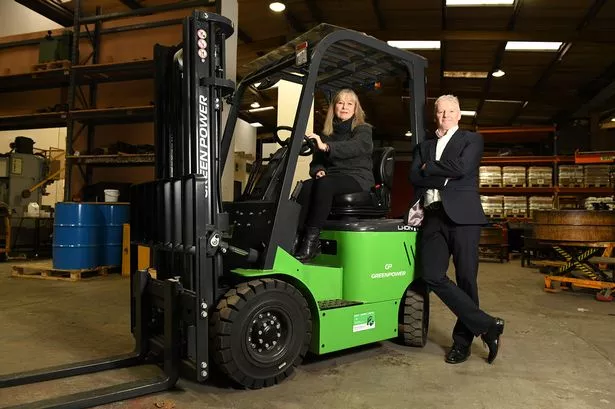
A Black Country manufacturer has secured new funding to support its exporting activities and improve its green credentials. Halesowen-based Swift & Whitmore has received almost £10,000 in grant finance from Business Growth West Midlands to target £8 million in sales and decarbonise its operations. The company is one of the last remaining UK manufacturers of resin-bonded abrasives, supplying more than 200 different products to customers in sectors such as aerospace, automotive, oil and gas and heavy engineering, both in the UK and internationally. Its product range includes grinders, hot pressed wheels, diamond grinding wheels and coated abrasives. Swift & Whitmore has just completed installing energy efficiency lighting throughout its headquarters and also received a productivity grant to assist with upgrading the firm's stores and logistics department, including the purchase of a new forklift truck. This latest capital injection is part of a larger £50,000 investment drive. Managing director Janette Tierney said: "The installation of the new lighting and a forklift truck will help us become more sustainable in our processes and, importantly, will also deliver cost savings in the long-term. "We're now planning to take another person on in logistics which will take our total workforce in the Black Country and our Chesterfield manufacturing operation to 50." Business Growth West Midlands is based in Dudley and funded by Dudley Metropolitan Borough Council via the UK Shared Prosperity Fund. It runs information and support services.

Nissan supplier to launch £48.7m North East factory creating 183 jobs

Nissan supplier to launch £48.7m North East factory creating 183 jobs

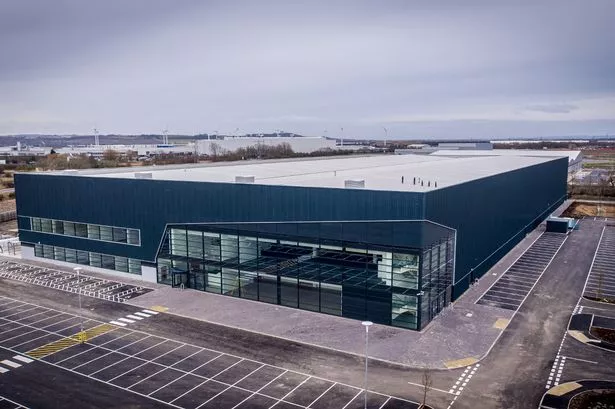
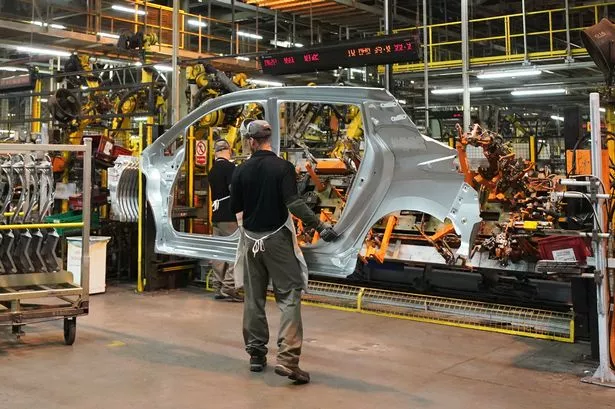
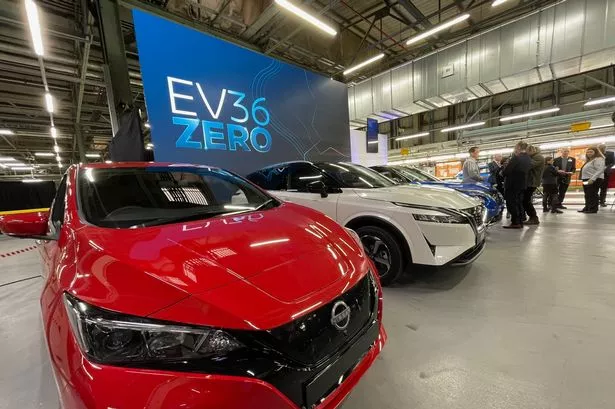
A key supplier to Nissan has signed a deal with the Government to bring a £48.7m factory to the North East, which could employ up to 183 people. Jatco, which stands for Japan Automatic Transmission Transmission company and was formed by Nissan in 1970, is refitting and expanding a 138,840 sqft building at the International Advanced Manufacturing Park which was originally built for an automotive supplier but subsequently became the Nightingale Hospital during Covid and has been vacant since. The facility is a stone's throw from Nissan's Sunderland plant and will provide electric drivetrains for three all-electric models built at the plant: the Leaf, Juke and Qashqai. Jatco has secured more than £12m of grant funding from the Government's Automotive Transformation Fund (ATF) towards the venture, which the Business and Trade Secretary Jonathan Reynolds has claimed is a mark of confidence in the country's economy. It follows a period of global uncertainty for Nissan which has recently entered merger negotiations with Honda in the face of falling sales and financial challenges. Mr Reynolds said: "Sunderland is the beating heart of the UK’s automotive industry. Today’s announcement is a massive vote of confidence in the UK economy and this Government’s plans to make Britain the destination of choice for investment. "Not only will this boost our thriving auto industry, but it will help secure hundreds of jobs across the North East. The Government is working hand in hand with investors to build a globally competitive electric vehicle supply chain in the UK and our modern Industrial Strategy will build on this legacy, bringing growth, jobs and opportunities to every part of the UK." The new plant will be operated by new division Jatco UK and is due to be operational in 2026. From there, it hopes to ramp up production to 340,000 electric powertrains per year. The technology modularises and integrates the motor, inverter and reducer, and is said to make the drivetrains smaller and lighter. Tomoyoshi Sato, the firm's CEO, said: “I am so proud to officially open Jatco UK in the North East of England. We have enjoyed a long and fruitful partnership with Nissan and we are delighted to bring the manufacture of our 3-in-1 powertrain to the UK. This will be our fourth country for an overseas production plant, with other locations in Mexico, China, and Thailand. I am very grateful for the support of the UK Government, Sunderland City Council, and all others involved in the establishment of Jatco UK, and look forward to supporting Nissan’s EV36Zero project with these electric powertrains.” Jatco's investment in the North East is said to build on Nissan's multibillion-pound EV36Zero project which combines renewable energy with the production of the three all-electric models, and includes a third neighbouring gigafactory to make more batteries for the plant. Alan Johnson, senior vice president, manufacturing, supply chain and purchasing for Nissan AMIEO, said: "This is a fantastic step forward for our world-first EV36Zero plan. Welcoming a key supplier to the North East of England provides a big boost to the efficiency of our supply chain. We look forward to continuing our long and successful partnership as we push towards our electric future." Construction firm GMI has been appointed to carry out the extension and upgrading of Unit 6, which Jatco will occupy, having delivered the original facility in 2019.

Bentley issues warning over China demand as profits and revenue fall

Bentley issues warning over China demand as profits and revenue fall

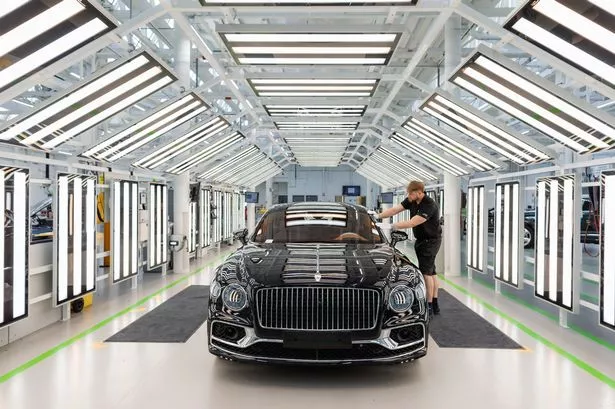
Bentley Motors has announced a decrease in profit and revenue, with its CEO attributing the decline to reduced demand in China. The luxury car manufacturer, a subsidiary of Volkswagen, reported an annual operating profit of €373m (£314m) and revenue of €2.6bn (£2.2bn), as reported by City AM. Although this profit is the sixth highest in Bentley's history, it represents a drop of over a third from the €589m recorded last year. CEO Dr Frank-Steffen Walliser informed journalists that the downturn was due to diminished demand in China, where high-end brands have been hit by lower consumer confidence. Customisation continued to bolster earnings, with unprecedented demand for bespoke models resulting in Bentley's highest-ever revenue per car, up 10 per cent year-on-year. "Despite global challenges in 2024 and the run out and replacement of three of our four model lines, financial resilience measures introduced towards the end of the last decade ensured a sixth year of consistent profitability," Walliser stated. "Looking forward to 2025, of course we continue to navigate difficult global market conditions and maintained volatile political and economic environments, however our strength of sales is strong." Bentley is in the initial stages of transitioning to an electric fleet and aims to persuade investors that there is consumer demand for a non-traditional version of its luxury models. The company plans to launch its first BEV in 2027.

Penarth headquartered global diagnostics firm EKF appoints new CEO

Penarth headquartered global diagnostics firm EKF appoints new CEO

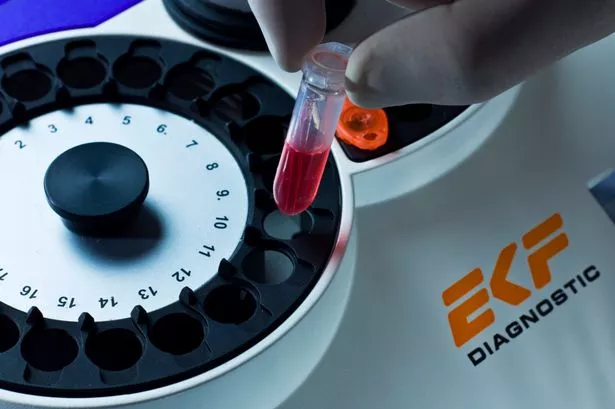
Penarth headquartered global diagnostics company, EKF Diagnostics, has appointed a new chief executive with immediate effect. The Alternative Investment Market listed business has promoted its chief product officer, Gavin Jones, to the role. Founder of the business, Julian Baines, had been at the helm of the business in an executive chair capacity, a role that he will remain in for the foreseeable future. Penarth-born Mr Baines, said: “I’m delighted that Gavin Jones is taking on the role as chief executive and joining the board. Gavin has over twenty years of experience in point-of-care and life sciences and has been instrumental in driving the commercial success of many of our products. "Many shareholders have met Gavin over the last year or so as he’s become more and more involved in the senior leadership team. Gavin has ambitious plans for delivering sustainable growth and unlocking the unrealised potential that our core products and service hold. We have an exciting opportunity to increase our commercial investment to drive organic growth and I’m delighted that Gavin will lead that process.” For its financial 2024 (calendar) financial year EKF post revenues of £50.2m (down from £52.6m a year earlier), which reflected a move away from lower margin products. Adjusted Ebitda climbed 9.2% to £11.3m while its pre-tax rose from £2.1m to £6.3m. Mr Baines said:”The 2024 results reflect the positive effects of our rationalisation process and the benefits that a more simplified business with greater commercial focus on higher margin products and services can bring to the group. “We have already delivered further significant improvements to our adjusted Ebitda margin and vastly improved cash generation, however we believe our five-year development plan will further improve these metrics, with sensible reinvestment into our key business divisions to drive organic growth and margin improvement. “EKF remains a well-established business, with a core product portfolio that is capable of significant growth with the right investment. We continue to generate significant levels of cash from our operations and we believe our biggest challenge as a board is to deploy this cash most effectively to generate further growth and value for shareholders.”

Tata Steel in green steel supply deal with JCB

Tata Steel in green steel supply deal with JCB

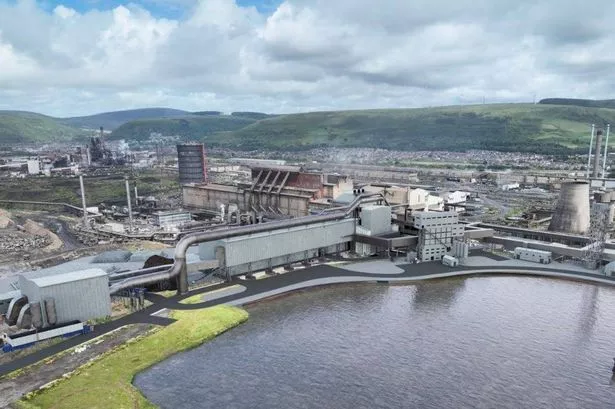
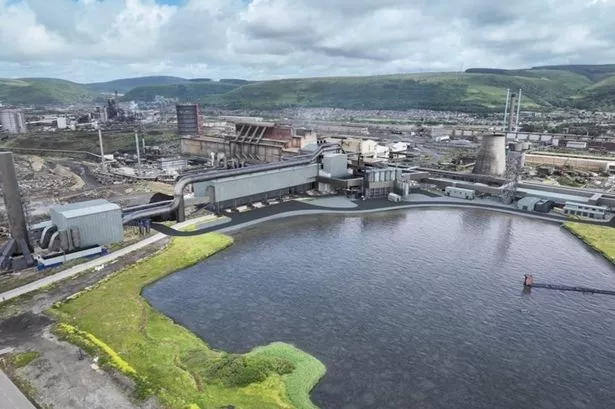
The £1.2bn electric arc furnace at Port Talbot will supply steel to construction equipment manufacturer JCB once operational. The electric arc furnace (EAF) from Tata Steel UK, following the ending of blast furnace primary steelmaking at Port Talbot, is scheduled to become operational in 2027. The supply contract between the Indian-owned steelmaker and JCB, currently in the form of a memorandum of understanding, is the first since Tata announced its EAF plans. The three million-tonne per year EAF - which will be one of the largest in the world - will provide a lower CO2 alternative to the traditional blast furnace method. The £1.2bn investment includes £500m funding from the UK Government. The EAF will turn UK-sourced scrap into new steel, removing the need to ship millions of tonnes of iron ore and coal from across the world to Port Talbot. Tata Steel’s plans will cut the site’s carbon emissions by up to 90% and UK’s overall carbon emissions by about 1.5%. ]Don't miss the latest news and analysis with our regular Wales newsletters – sign up here for free Anil Jhanji chief commercial officer, Tata Steel UK, said: “One of the key drivers in our transition plans is that our long-standing and loyal customers such as JCB need green steel to meet their own decarbonisation ambitions. They want to be supplied by a trusted partner making quality steel within the UK. "This announcement that two of the UK’s largest manufacturers are working together to create a low-carbon supply chain is an important step in the UK’s transition to a circular economy.” Wayne Asprey, group purchasing director of JCB, said: “Tata Steel is a long-term supply partner for JCB and this agreement marks an essential next step in our journey towards supply chain decarbonisation. "We are fully supportive of Tata Steel UK’s investment proposals and are pleased to be one of the first customers to endorse those plans by making this agreement to secure British-made green steel as soon as it is available.” Tata Steel signed a contract in October with Italian firm Tenova to build the EAF. Subject to planning approval construction work will start next summer.

UK's manufacturing sector sees sharpest job losses since 2020 as demand plummets

UK's manufacturing sector sees sharpest job losses since 2020 as demand plummets

The UK's manufacturing sector has seen its activity drop to a fourteen-month low, according to a new survey. This is due to lower demand and weak confidence within the industry. The S&P's manufacturing purchasing managers' index (PMI) revealed that downturns have deepened as firms prepare for changes in the Government's budget, as reported by City AM. The PMI fell to 46.9 from 47.0 in January, which was then the lowest level in 11 months. Despite beating the 'flash' estimate of 46.4, the PMI showed that the downturn led to the most significant job losses since mid-2020. All three sectors - consumer, intermediate, and investment goods - experienced reductions in production and new orders, with the consumer goods sector being the worst affected. S&P stated that the latest round of job cuts was due to "weak demand, cost control initiatives and restructuring in response to changes in both the minimum wage and employer national insurance contributions". Companies reacted to the worsening downturn by laying off staff, reducing hours, making redundancies, and not replacing those who left or retired. The recent data showed that staffing levels have fallen in five out of the past six months. Rob Dobson, Director of Global Market Intelligence at S&P, commented: "Weak demand, low client confidence and rising cost pressures are accelerating the downturns in output and new orders, while the Autumn Budget's changes to the national minimum wage and employer NICs are driving up inflation fears and intensifying the downward trend in staff headcounts." He added, "The pace of manufacturing job losses is currently running at a rate not seen since the pandemic months of mid-2020." The 1.2 per cent increase on employers' national insurance to 15 per cent was a key policy introduced by Chancellor Rachel Reeves in her budget. These figures will likely dent public confidence in the Chancellor, following Reeves' promise to "unleash growth" across the UK. Both domestic and foreign markets were impacted, with the home front suffering due to a combination of lack of expenditure and impacts of the Autumn budget.

Losses widen at SIG plc as it tackles 'ongoing challenging' trading conditions

Losses widen at SIG plc as it tackles 'ongoing challenging' trading conditions

Building supplies company SIG plc saw its losses widen in 2024 in what it called an “ongoing challenging market”. The Sheffield-based company has released results for last year in which its revenues fell 4% from to £2.61bn. That saw the company's pre-tax losses increase from £31.9m a year earlier to £44.8m. SIG said its performance had been “robust” and that it had seen an improvement in sales in the second half of the year. It also highlighted “good progress” to boost medium and longer term profitability, including a cost savings programme that had taken 430 jobs out of the business and saw the closure of 17 underperforming sites. SIG said its French and German businesses continued to face the most subdued markets but pointed to sales growth in Ireland and within its UK roofing business. Chief executive officer Gavin Slark said: “The group's 2024 results reflect a robust trading performance in challenging markets. We continued to experience lower volumes from weak end-markets across the UK and EU, but we have used this period to reshape our operations, through cost reduction and restructuring actions, and to create better performing businesses across the group. This will help to significantly improve our future profitability when markets recover. "We also maintained a keen focus on our customers and delivering great service. I am proud of the energy and resilience our people have continued to demonstrate in this tough environment. “Across all our operations we are implementing a range of initiatives under our 'GEMS' strategy, which will lead to a higher-value sales mix, continually stronger commercial execution, and more efficient operations, all of which will support delivery of our 5% medium-term operating margin target. "The operational gearing in our business model applies equally strongly in conditions of rising demand, and, accordingly, the board believes the group remains very well positioned to benefit from the market recovery when it occurs." SIG supplies building products to trade customers in the UK, France, Germany, Ireland, Benelux and Poland. It employs around 6,700 employees across Europe and is listed on the London Stock Exchange.

Gooch & Housego warns of price rises in response to Trump's proposed tariffs

Gooch & Housego warns of price rises in response to Trump's proposed tariffs

A Somerset components manufacturer has warned it may be forced to increase prices in response to President Donald Trump's tariffs on countries including China and Mexico. Ilminster-based Gooch & Housego, which makes detectors, lasers and fibre optic equipment, said it was "closely monitoring" the situation and the "retaliatory responses" from the nations affected. But it planned to pass on any cost impact to customers. The company told investors on Monday (February 24) it was also "alert" to any potential supply chain disruptions caused by China limiting the export of certain materials used in the manufacture of its products in response to the new tariff regime. "Our supply chain and engineering teams are working to identify alternative sources for those materials," a spokesperson said. On Monday, Gooch & Housego also announced an increase to its order book to £126.4m - up from £104.5m at the end of September. But it warned that recovery in the the semiconductor and industrial laser markets remained slow. "We continue to expect those markets to recover in the second half of this calendar year and to contribute to the group's trading in our fourth quarter," the firm said. "We are starting to see the level of customer orders improve in several of our Industrial sub-markets but the recovery is not yet broadly based." The company's net bank debt at the end of January 2025 rose to £19.2m as a result of the acquisition of Phoenix Optical in October and currency exchange movements. Lease liabilities totalled £10.2m. The business said full-year trading expectations would remain unchanged if the company was successful in navigating the changing tariff landscape. Charlie Peppiatt, chief executive of Gooch & Housego, said: "I am pleased to see the increase in the group's order book since the beginning of the year. It is clear the focus on delivering our strategic plan through improved customer experience, superior operational execution and value creating technology is starting to bear fruit. "Whilst we are mindful of the uncertainty that new tariff regimes are introducing across several of our end markets, we remain positive that the group will deliver a significantly improved financial performance in FY2025. The group is strongly positioned in attractive growth markets and well placed to benefit as its industrial markets return to growth."

Nissan hails biodiversity plan as Sunderland factory site attracts badgers, newts and birds of prey

Nissan hails biodiversity plan as Sunderland factory site attracts badgers, newts and birds of prey

A rewilding project at the North East's biggest factory is said to have created a habitat in which badgers, water voles and newts are thriving. Automotive giant Nissan says they are just some of the animals to be found on marshland next to its Sunderland factory where it has carried out works to boost biodiversity. Bats, amphibians and birds of prey are also among the species spotted at the area which is next to the manufacturer's wind and solar farms, which help power the plant. The project was led by the factory's engineering team in conjunction with solar farm developer Atrato Partners Ltd and took just over a year to complete. Workers removed invasive shrubs, revitalised the habitat and build a viewing hide at the site. Now a host of difference animals, also including birds such as owls, herring gulls, kestrels and buzzards have been seen there, along with badgers, deer and great crested newts. There is also a variety of flora developing including white clover, bee orchids, garden lupin and cows slips. Andy Barker, engineering manager at the plant, said the rewilding efforts have turned uninhabited marshland into a thriving habitat for wildlife. He said: “We’re passionate about sustainability so it is fantastic to be able to create an area for wildlife to thrive. "We’ve carried out the rewilding close to where we built our first wind farm nearly 20 years ago and near our second solar farm, so this part of the plant has been the focus of our sustainability drive. It’s fantastic to continue that journey and we’ve been amazed at how quickly and how many of the various animals have taken up residence." Together, Nissan's wind and solar farms can generate up to 20% of the factory's electricity needs. In 2021 the Japanese manufacturer unveiled its multibillion-pound EV36Zero project, bringing together a new battery plant and on-site renewable energy sources to power production. Mr Barker added: "The second solar farm project allowed us to transform the existing marshland by adding a further pond and a maintained new grassland. It was about taking a holistic approach that included eco diversity as well as renewable energy." Nissan has also set out plans to make the Sunderland factory a flagship site for electric vehicle production which it hopes to emulate around the world. Under the firm's Ambition 2030 strategy, it aims to become carbon neutral across the life cycle of its products by fiscal year 2050.

Jatco boss eyes wider European opportunities with new Sunderland factory

Jatco boss eyes wider European opportunities with new Sunderland factory

Japanese automotive supplier Jatco says its forthcoming North East factory will serve hopes of wider European work, including with brands such as Volkswagen and BMW. The majority Nissan-owned transmission specialist says 80% of its capacity at the newly announced Sunderland factory will be given over to production of drivetrains for Nissan's all-electric models that are built at its nearby plant. Jatco boss Tomoyoshi Sato said he also hoped to secure work with other manufacturers as the North East facility - its fourth factory in addition to Mexico, China, and Thailand - would serve as a key European base. Mr Sato said there was no timeline on reaching the planned 340,000 unit per year capacity at the International Advanced Manufacturing Park facility, which is expected to support more than 180 jobs. Work is due to start soon on the extension and fit-out of the 138,840 sqft building. Jatco has received £12m of grant funding from the Automotive Transformation Fund towards the £48.7m investment. Mr Sato told BusinessLive the British Government was "very good to us" and thanked ministers and officials for their support. At an event marking the launch of new division Jatco UK, which will operate the plant, Mr Sato said the firm would develop the plant into one with high production efficiency in the hope that it could expand further. He said: "Since our establishment in 1970, we, as Jatco, have spent over 50 years developing and producing transmissions for automobiles and supplying them to Nissan and other automotive manufacturers all over the world. "To date we have produced over 129 million automatic transmissions and have continued to hold the global top share in CVTs [continuously variable transmissions] in the 15 years since 2008. "The Nissan Qashqai, being produced by Nissan Motor Manufacturing in the UK, is fitted with one of our continuously variable transmissions. In addition, with electrification of vehicles, we will be suppling e-axles and other electrified parts ranges to the global market. Jatco UK is our first overseas production plant after our plants in Mexico, China and Thailand. And our first production plant in Europe. "This plant will also let us participate in EV36Zero - Nissan's transformation project in Sunderland. Jatco UK will be located here in Unit 6 of the International Advanced Manufacturing Park in Sunderland." The decision by Jatco to set up the Sunderland facility is being touted by the Government as a wider mark of confidence in the UK economy following a tumultuous period for UK automotive manufacturing. That has seen Ford and Vauxhall owner Stellantis slashing jobs, and Nissan itself sparking concern with plans to cut thousands of jobs globally amid poor sales and financial challenges. Manufacturers have also objected to the UK's Zero Emissions Vehicle mandate, forcing the Government into a consultative review. Investment Minister Poppy Gustafsson was at the Sunderland launch event and played down the concerns when asked by BusinessLive. She said: "Look what we're seeing today: Jatco's phenomenal investment into this facility in Sunderland. The reason they're doing that is because of the brilliant people working here in Sunderland, and the brilliant skills within the automotive sector. "When we think about the Government's goals, where is to drive economic growth and to support ambitions in terms of the green energy transition. We have to work with the private sector to accomplish that, and on the one hand we want to encourage this movement to electrified vehicles and on the other hand we don't want to do that at a pace that is too disruptive to the private sector.

Cheshire's Packaging One doubles workforce having secured seven figure funding deal

Cheshire's Packaging One doubles workforce having secured seven figure funding deal

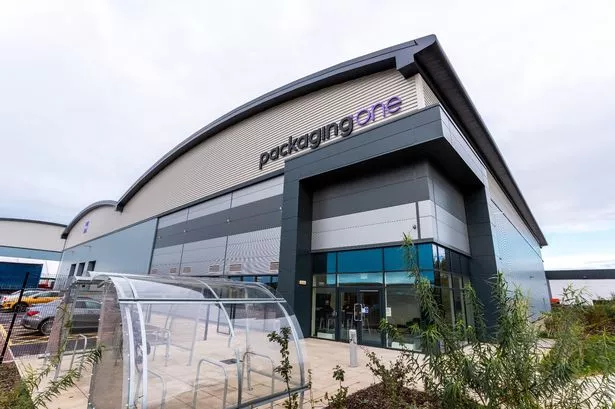
Jobs have been created by family-run Packaging One following a seven-figure funding deal from NatWest and Royal Bank of Scotland. The provider of protective wrappings and boxes, among other products, intends to double its workforce to 80 people following the funding injection. Expansion into the firm's 44,000 sqft premises in Middlewich has given Packaging One increased manufacturing capabilities by about 70% amid a recently secured contract with an unnamed customer described as a 'global tech giant' for its patented MediaWrap product which is used for protecting trade-in and recycled mobile devices. Packaging One was set up in 2008 and is run by husband-and-wife team Ian and Emma Chesworth, who have more than 30 years' experience in the industry. The business' operations span the UK, Europe and USA Mr Chesworth, director of Packaging One, said: “The expansion is a huge step in our growth and development. Not only is it good for our business but we are proud to be able to contribute to our community by creating new jobs and employing local people.” Fellow director Mrs Chesworth added: "We have been working with the NatWest team for almost two decades. Over that time, they have partnered with us to support our business and helped us reach key milestones around our growth and expansion." Claire Morley, senior relationship manager at NatWest, said: “We are thrilled to support Ian, Emma and the Packaging One family as they begin a new chapter in their business development. As the UK’s biggest bank for small businesses, we work collaboratively with customers to understand their needs and help them find solutions to support their businesses as they grow.

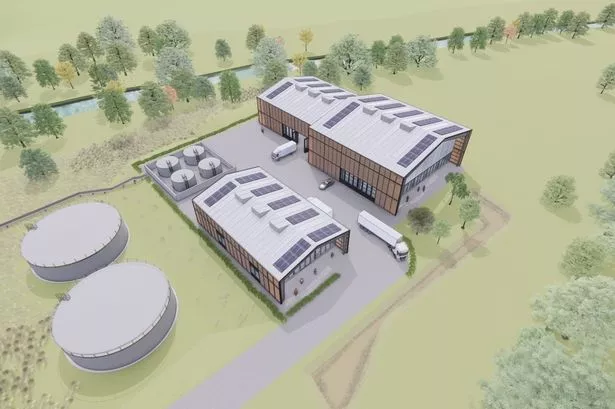
Rockwool takes next step towards new Birmingham factory

Rockwool takes next step towards new Birmingham factory

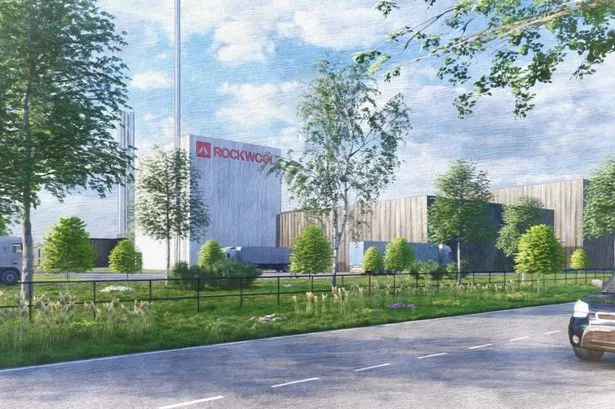
A manufacturer has moved a step closer to starting work on a huge new facility in north Birmingham. Rockwool has submitted a so-called 'Section 73' application to Birmingham City Council in support of its plans to build a factory on the Peddimore site in Minworth. The company makes stone wool products like building insulation, acoustic ceilings and external cladding for sectors such as construction, marine and offshore. This new Section 73 application is requesting permission to vary some of the details in the current planning permissions at Peddimore to suit Rockwool's specific proposal. If approved, the company then plans to submit a more detailed reserved matters application later in 2025 or early 2026. Email newsletters BusinessLive is your home for business news from across the West Midlands including Birmingham, the Black Country, Solihull, Coventry and Staffordshire. Click through here to sign up for our email newsletter and also view the broad range of other bulletins we offer including weekly sector-specific updates. We will also send out 'Breaking News' emails for any stories which must be seen right away. LinkedIn For all the latest stories, views and polls, follow our BusinessLive West Midlands LinkedIn page here. Another round of community consultation will take place once more detailed plans and designs have been developed and the plan is to start construction as early as next year and be operational in 2029. This latest application follows the news last year that it had struck a deal to buy 114 acres of land which already has outline consent for manufacturing uses. Rockwool's proposed new factory will feature proprietary electric melting technology and boost supply capacity for UK and Ireland customers while also supporting its global sustainability plans. The Peddimore site at Minworth has been designated specifically for manufacturing and logistics uses and is part of a long-running regeneration and development project. Infrastructure including an access road and roundabout is already in place which serves the new Amazon warehouse which opened in 2023 next to where Rockwool's factory would be. UK and Ireland managing director Nick Wilson said: "Since we announced our intentions to expand the business into the West Midlands, we have had an opportunity to share our plans with the community and are very grateful to those who have provided feedback. "We are taking all feedback into consideration as we develop the plans and have included the community's observations so far in our Section 73 application to the council. "We look forward to meeting with community members again in the coming months." Rockwool's roots date back to 1937 when it first started producing stone wool in Denmark and now employs around 12,500 staff in 38 countries.

Rolls-Royce CEO's pay slashed by almost £10m despite huge rise in FTSE 100 shares

Rolls-Royce CEO's pay slashed by almost £10m despite huge rise in FTSE 100 shares

Tufan Erginbilgic, the CEO of Rolls-Royce, has experienced a significant reduction in his pay by nearly £10m, despite his successful turnaround of the FTSE 100 heavyweight. The Derby-based company's latest financial year saw Erginbilgic pocketing £4.1m, a stark contrast to the £13.6m he earned in the previous 12 months, as reported by City AM. His earlier remuneration was inflated by a £7.5m compensation for earnings lost from a former job. Another factor contributing to the drop was the decrease in Erginbilgic's annual incentive plan earnings, which fell from £4.6m to £2.5m. Rolls-Royce has now introduced a changed separate bonus and long-term incentive plan scheme for its CEO, with the first LTIP not due to vest until the end of 2026. In 2023, his hefty pay package placed him as the third highest earning FTSE 100 CEO, trailing only Astrazeneca's Pascal Soriot and Relx's Erix Engstrom. However, Erginbilgic's base salary did see an increase, rising from £875,000 to £1.1m over the year, with a further five per cent hike planned for 2025. A Rolls-Royce spokesperson said: “We delivered record results in 2024 thanks to our ongoing transformation, achieving our mid-term targets two years earlier than planned and enabling us to upgrade our guidance for 2028. It is in the interests of all stakeholders that such strong performance and progress is rewarded. UK companies must be able to attract excellent talent and reward them when they deliver.” The Turkish businessman joined Rolls-Royce in July 2022 and assumed his role at the start of 2023, following a two-decade stint at BP that ended in 2020. Since succeeding Warren East as Rolls-Royce's chief executive, Erginbilgic has seen the company's share price soar from approximately 150p to over 800p. A substantial portion of this surge occurred recently – jumping from around 610p to its current level – in the wake of the defence summit in London, where European leaders expressed their support for Ukraine and committed to increasing defence spending. At the culmination of February, City AM disclosed that Rolls-Royce had decided to restart dividend payments to its shareholders and announced a bold £1bn initiative for repurchasing shares after reporting annual profits that exceeded market forecasts. Rolls-Royce's CEO hailed for spearheading 'impressive progress'. In the company's annual report, remuneration committee chair Lord Jitesh Gadhia was quoted praising the leadership team's accomplishments: "Tufan Erginbilgic and the executive team have delivered continued improvement in performance levels with impressive progress made on the group's transformation, generating real value for shareholders." He elaborated on the future targets, saying, "Achievement of the medium-term guidance will take Rolls-Royce significantly beyond any previously achieved level of financial performance and we are on track to deliver the commitments ahead of schedule." Lord Gadhia also emphasised the importance of incentivising management: "We are determined to incentivise the management to build upon the progress made and maintain momentum."

Cardboard packaging firm DiamondPak in job creating £2m investment

Cardboard packaging firm DiamondPak in job creating £2m investment

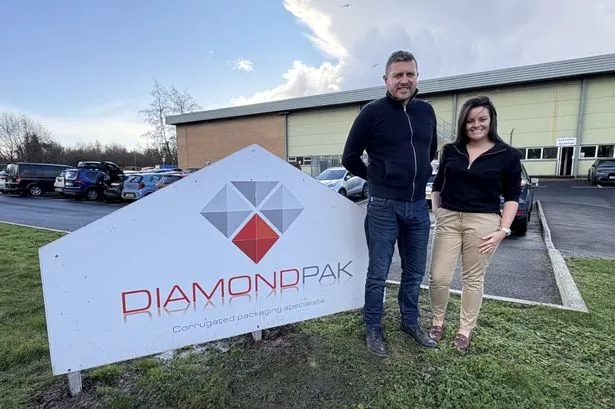
Cardboard packaging specialist DiamondPak is investing £2m in new machinery to cement its position as the UK’s leading supplier to the e-commerce market in an expansion that will increase its headcount by 20%. The Pontypool-based business manufactures more than 50 million corrugated cardboard packages a year, much of which it supplies to leading global e-commerce businesses. DiamondPak is investing in new technology, including purchasing a new double-sided printing machine to help fulfill even more orders. The investment will help the business to grow further and allow it to employ up to 20 additional members of staff over the next couple of years. DiamondPak was founded in 2008 and is based in Skewfields, near Pontypool in Torfaen. It now employs more than 100 people and has an annual turnover of £15m. It designs, manufactures, assembles, and delivers a range of corrugated packaging from cardboard shipping boxes to promotional and protective packaging. The growth of online shopping in recent years, especially since the pandemic, has driven the e-commerce market to new heights. Figures show the UK is now the most lucrative e-commerce market in Europe, with an estimated 50 million users in 2024. The market is expected to grow by 7% over the next four years. DiamondPak chief executive, Russell Davies, said: “The UK e-commerce market is huge, and growing. DiamondPak is already the leading independent full line supplier of corrugated packaging to the e-commerce market in the UK, and this significant £2 million investment will help consolidate our position. It will also give us the enhanced capacity and flexibility we need to serve the evolving demands of the market in the coming years. “As a proud local employer in a region known for its manufacturing history, we’re especially pleased that this investment will help us grow our workforce even more, and allow us to create up to 20 skilled jobs in Pontypool.”

Yara confirms Howden fertiliser plant is on track for production next year amid Hull closure

Yara confirms Howden fertiliser plant is on track for production next year amid Hull closure

Fertiliser giant Yara International says it is on track to commission its forthcoming East Yorkshire site this year, despite mothballing its Hull ammonia plant. The Norwegian multinational says the commissioning phase for its Yara Vita and Yara Amplix production plant in Howden will take place at the end of this year, before full production is expected to start in the first half of 2026. Work has been under way at the £50m Ozone Business Park site which is intended to double production of its YaraVita speciality crop nutrition products and biostimulants - both of which are touted as key products to build food security. At the same time, Yara confirmed the mothballing of its Hull ammonia plant, which is owned but not operated by the group. The decision comes amid efforts to drive $150m cost reduction by the end of this year. A Yara statement on the closure of the Hull ammonia plant said: "Yara’s Hull ammonia plant has been mothballed. This planned transition follows the supplier's decision to terminate the feedstock deliveries. We are continuously optimizing our portfolio, the plant may be restarted in the future if Yara can secure access to competitive feedstock from other sources." In its Q4 2024 results, Yara said the energy transition, climate crisis and food security were top priorities globally and that its food solutions and ammonia activities positioned it well to tackle these issues. The firm said: "Sustainable profitability in core operations and value accretive growth opportunities are both critical to enable a fit-for-future Yara. "While Yara has successfully navigated recent volatility by focusing on operational continuity, recent returns have been below satisfactory levels. Yara’s strategy prioritises resources towards higher-return core assets and activities while scaling back non-core and lower-return activities. In line with this, Yara is executing a cost and capex reduction program targeting a reduction of fixed cost and capex by $150m each by the end of 2025, with a $90m fixed cost reduction reported by end 2024, including $20m from divestments and $25m currency effects."

Aviation services firm AerFin look to accelerate as it unveils new South Wales HQ

Aviation services firm AerFin look to accelerate as it unveils new South Wales HQ

Aviation asset specialist AerFin has relocated to new headquarters in Newport in an investment doubling its capacity. It has entered into a 10-year lease for 116,000 sq ft of office and industrial space at Indurent Park (formerly St Modwen Park) in Newport. The £170m turnover business buys, sells, leases and repairs aircraft, engines and parts. It said its new HQ, which has seen it relocating from a smaller operation in Bedwas, marks a significant milestone in its global expansion. The new facility doubles AerFin’s engine maintenance, repair and overall capacity, enabling up to 200 quick-turn shop visits annually. The expansion also ensures faster turnarounds to meet rising demand from the aviation industry. AerFin’s chief executive, Simon Goodson, said: “Our new headquarters in South Wales marks a significant step in our growth journey. It reinforces what our customers, partners, suppliers and investors value about our capabilities to deliver confidently, reliably and progressively for them across a global footprint that includes key facilities in Miami, Singapore, Dublin and London Gatwick. “Indurent Park will be a cornerstone of our growth, enabling us to meet the needs of a global customer base while maintaining strong roots in South Wales.” The business has a global workforce of 213 with 105 at its Newport HQ. Worldwide it serves 600 customers. Cardiff-based property consultancy firm Cooke & Arkwright acted for AerFin on the letting. JLL and Knight Frank are joint marketing agents for Indurent Park. Trefoil Interiors supported AerFin on its relocation. Ben Bolton, director of business space for Cooke & Arkwright, said: “We are thrilled to have secured this property for our clients. We were hired to develop Aerfin’s property strategy which included significant business growth and operational efficiency targets. The acquisition reflects the endpoint of a long project, further demonstrating our experience and commitment to providing tailored solutions for clients that align with the evolving needs of many occupiers.” Hannah Bryan-Williams, development and leasing manager at Indurent, said: “We developed Indurent Park Newport to meet the growing regional demand for sustainable, mid- and large-scale industrial spaces that cater to both leading global corporates and local businesses. "We’re thrilled to welcome AerFin to the park, a standout Welsh success story and a leader in sustainable aviation solutions. Their presence, alongside other innovative tenants, highlights the ongoing strength and appeal of Indurent Park as a hub for forward-thinking companies.” It comes a AerFin has completed thte the purchase and teardown of one of the largest twin-engine passenger aircraft in the world, the B777-300ER, that has been retired by Japan Airlines. Mr Goodson said: “This transaction was a complex project where we combined our deep technical, commercial and operational capabilities with our partner to confidently and reliably retire the aircraft to our customer’s expectations. “We all worked tirelessly to conduct the technical acceptance work in Japan, organise the ferry flight to the US and then efficiently tear down the airframe for its parts to be re-used. Our focus on bringing clarity to complex transactions such as this one further demonstrates our commitment to Asia Pacific and Japan specifically.”

UK manufacturing woes deepening as industry 'hit on several fronts'

UK manufacturing woes deepening as industry 'hit on several fronts'

The latest UK Purchasing Managers' Index (PMI) from S&P Global indicates a deepening crisis in the country's manufacturing sector. S&P Global's most recent PMI survey, which gathers data from approximately 600 industrial firms about their performance, suggests that manufacturing is once again on a downward trajectory after a disappointing start to the year, as reported by City AM. The latest figure reveals a drop to 44.9, slightly better than the anticipated 44.6 predicted by economists. This represents the lowest reading in 17 months, compared to an average of 51.7 between 2008 and 2025. Rob Dobson, director at S&P Global Market Intelligence, described the outlook as "darkening" with confidence plummeting across the sector. Dobson stated: "Companies are being hit on several fronts." He elaborated: "Costs are rising due to changes in the national minimum wage and national insurance contributions, geopolitical tensions are intensifying, and global trade faces potential disruptions from tariffs." He added: "Although the impact on production volumes was widespread across industry, it was again small manufacturers that took the hardest knock." The manufacturing sector had already begun to falter in the new year. The Confederation of British Industry (CBI) reported a decline in output in January, suggesting businesses were "conserving funds" in response to Reeves' tax raid, which includes increases to national insurance contributions (NICs). Employer taxes are scheduled to be implemented starting this week, with the threshold for paying the levy lowered to £5,000.

Fears for Scunthorpe steelworks jobs as consultation launched on closure

Fears for Scunthorpe steelworks jobs as consultation launched on closure

British Steel's Chinese owner Jingye is launching a consultation on the closing of its blast furnaces at Scunthorpe steelworks, sparking fears for thousands of jobs at the site. Unions the GMB, Community and Unite have called on the Government to help secure the future of British Steel, which has said the closure could come at a later date if an agreement is reached. Jingye, which pointed to the impact of tariffs among the reasons for the decision, says it has invested more than £1.2bn in British Steel since it took over in 2020 and has incurred losses of about £700,000 per day. It said: "Despite this, the blast furnaces and steelmaking operations are no longer financially sustainable due to highly challenging market conditions, the imposition of tariffs, and higher environmental costs relating to the production of high-carbon steel. The company had sought support from the UK Government for a major capital investment in two new electric arc furnaces. "However, following many months of negotiations, no agreement has been reached. As a result, the difficult decision has been made to consult with employees and to consider proposals to close the blast furnaces and steelmaking operations and reduce rolling mill capacity." British Steel chief executive Zengwei An said: "We understand this is an extremely difficult day for our staff, their families, and everyone associated with British Steel. But we believe this is a necessary decision given the hugely challenging circumstances the business faces. We remain committed to engaging with our workforce and unions, as well as our suppliers and customers during this time." News of the consultation follows a plan put forward in February by Community which proposed to keep two blast furnaces at Scunthorpe while new, electric arc furnaces were built. The plan required £200m of Government support to offset carbon costs during the transition period. At the time, Community warned that if the Scunthorpe site was to close, the UK would become the only G7 country without domestic steelmaking capacity. The prompted worries over national security. Jingye said it had sought Government support for the major capital investment required for the electric arc furnaces but that months of negotiations had not yielded an agreement. Roy Rickhuss, Community general secretary, said: "This is a dark day for our steel industry and for our country. We urge Jingye and the UK Government to get back around the table to resume negotiations before it is too late. "Crucially, Jingye have not ruled out retaining the blast furnaces during a transition to low-carbon steelmaking if they can secure the backing of the Government. The closures at Scunthorpe would represent a hammer blow to communities which were built on steel, and where the industry still supports thousands of jobs directly and thousands more through extensive supply chains. "Given that we are now on the cusp of becoming the only G7 country without domestic primary steelmaking capacity, it is no exaggeration to say that our national security is gravely threatened. This would be catastrophic at any time, let alone in the current era of geopolitical instability and volatility. "Steel is an essential component of defensive infrastructure, just as it is to wider plans to invest in growth across the country. At this critical juncture, the Labour Government must do everything it can to secure the future of steelmaking at Scunthorpe - it would be unthinkable for them to let it die on their watch. "Labour has made important commitments to steelworkers, including setting aside £2.5bn towards supporting the steel sector with decarbonisation, and it is now time for Government to deploy these funds to protect the industry. "If the Government chooses to let Scunthorpe die it would make a mockery of their grand ambitions to deliver growth through massive infrastructure investment, because British Steel is our only steelmaker than can produce the construction steels the country needs for our roads, railways, schools and hospitals."

Aston Martin to pay top bosses more than peers after struggling to attract talent

Aston Martin to pay top bosses more than peers after struggling to attract talent

Aston Martin is set to outstrip its FTSE 250 counterparts by offering higher remuneration packages to its top executives, following difficulties in attracting high-calibre talent in recent years. The luxury car manufacturer, based in Warwickshire, is considering boosting the bonus potential for its CEO and CFO from 200% to 250% of their respective salaries, as reported by City AM. In a statement, Aston Martin noted that "while this would position annual bonus ahead of UK FTSE 250 practice, it would take our annual bonus policy to median within our identified global luxury peer group and lower quartile against our automotive peers." The company conceded that it has faced challenges in talent acquisition "due to the lack of competitiveness of our reward packages" under its latest remuneration policy. It further stated that the enhanced bonus opportunity would "continue to be linked to stretching targets, ensuring maximum payouts are only received for exceptional performance across a range of KPIs [key performance indicators]." Additionally, Aston Martin is proposing a new hybrid long-term incentive plan structure which would merge existing performance share awards with new restricted shares "to better support the delivery of our strategy." CEO Adrian Hallmark, who took the reins at Aston Martin in September last year after serving as chairman and CEO of luxury car maker Bentley, is among those set to benefit from these changes. Prior to Hallmark's appointment, Aston Martin was led by CEO Amedeo Felisa since 2022 under the watchful eye of executive chairman Lawrence Stroll. Hallmark's remuneration for his initial tenure at Aston Martin amounted to £1m, comprising a pro-rata salary of £333,000, an annual bonus of £600,000, and additional benefits and pension contributions. This financial disclosure follows a report by City AM in February revealing that Aston Martin was set to eliminate 170 jobs as part of a cost-cutting strategy. The job cuts, representing five per cent of its global workforce, are expected to yield savings of about £25m. Concurrently, Aston Martin reported an annual loss of £289.1m and a three per cent decline in revenue to £1.58bn. The company's debt escalated by 43 per cent to £1.16bn in 2024, with shares dropping by roughly a third. In the annual report, Anne Stevens, the chair of the remuneration committee, wrote: "While our 2022 policy was designed with good flexibility and has proved broadly fit-for-purpose, we have faced challenges that the proposed 2025 policy aims to address." "Aston Martin, while a UK-headquartered and FTSE-listed company, is a global business and sources executive talent from global luxury and automotive companies." "Over 80 per cent of cars we wholesaled in 2024 were to our regions outside of the UK, and our executive directors frequently visit the regions and must navigate regulatory and political challenges across global jurisdictions." She continued: "The committee avoids targeting the median of any single peer group and would not rely on benchmark data for policy changes, instead we take a holistic view of UK and global reward practices." "While we have been able to secure recent key hires, we have faced challenges during the recruitment process, due to the lack of competitiveness of our reward packages, particularly our incentive opportunities compared to global luxury and automotive peers (where we have recruited talent from)." "A further reference point considered was the history of realised pay at Aston Martin since 2021." "While outcomes of our incentives over recent years have reflected the ambitious nature of the company and industry-wide challenges and therefore the shareholder experience, the committee is mindful that incentive outcomes have not reflected the significant efforts of the team." "This has resulted in our executive directors being underpaid relative to other senior leaders at Aston Martin, who receive a portion of their remuneration in restricted shares. "While incentivising performance remains our priority, we believe we would benefit from a revised incentive approach, to better align the senior team and to reflect practice of our global peers."

Nissan boosts number of cars produced at Sunderland but UK company makes a loss

Nissan boosts number of cars produced at Sunderland but UK company makes a loss

Production volumes and turnover have jumped at Nissan's Sunderland factory, but a reorganisation of the business has seen it take on more costs. New accounts for Nissan Motor Manufacturing (UK) Limited show 325,000 cars rolled off the production line at the Wearside plant in 2024, compared with 260,000 the year before. Clearing disruption from worldwide semiconductor chip shortages over recent years was said to have helped the factory ramp up numbers with the Qashqai remaining the brand's biggest seller and one of the UK's top 10 models, of which 199,000 left for UK and European showrooms. Turnover was boosted from £5.03bn to £7.35bn in the year to the end of March 2024, as cost of sales crept up from £4.67bn to £6.92bn. But the plant swung to a loss during the year - recording an operating loss of £41.2m, from an operating profit of £49.4m a year earlier. Bosses said the losses had partly been caused by provisions for supplier claims amounting to £214m - including costs associated with onsite supplier activity and where there had been unforeseen changes to production schedules, along with price inflation. An internal shake-up of how Nissan is organised has also given the Sunderland plant a new status within the global group, making it liable for vehicle warranty costs where defects may have cropped up in the first three years or 100,000km of the vehicles it makes. The changes are said to have given the company more importance and prominence within the Japanese group. Staffing levels also increased during the year - with headcount reaching nearly 7,000. That was said to have been driven by the increased production volumes and additional design staff needed for future electric vehicle projects. The Sunderland plant is preparing to start making the third generation Leaf later this year, with new look Juke and Qashqai models revealed during last year. In recent weeks, Nissan issued images of a trio of models - including the third generation Leaf, as well as an all-electric Juke and the return of the Micra - which it hopes will do well in the European market. Results for Nissan's Sunderland operation, which has been there since the mid 1980s, are set against a challenging time for the Japanese multinational, which has been facing falling sales, financial challenges and a botched merger attempt with rivals Honda. Those difficulties have prompted a major restructuring of the business including slashing production and plans to shut three plants, including one in Thailand and two, as yet, unidentified.

Pearson Engineering works on robot mine sweeper being trialled by British Army

Pearson Engineering works on robot mine sweeper being trialled by British Army

North East defence specialist Pearson Engineering has helped to develop a robot mine sweeper which is now being trialled by the British Army to clear explosives on the front lines. The Newcastle company, based in the famous Armstrong Works, has worked with the Defence Science and Technology Laboratory (Dstl) to create Weevil, a device which is hoped will replace current mine-clearing methods that included Trojan armoured vehicles, which require a three-person team to operate in hazardous areas. The robot mine sweeper is said to be able to clear minefields quicker and safer than present capabilities, reducing risk to soldiers on the front line and it can be operated via remote control by just one person from several miles away. The prototype – which is fitted with a mine plough to clear a safe path – has been successfully tested on a surrogate minefield in Newcastle, and the technology is now being passed to the British Army for further development and more trials. Ian Bell, CEO at Pearson Engineering, said: “We are proud to contribute to such game-changing capability. It brings together decades of development by Pearson Engineering, delivering the very best of minefield breaching technology proven around the world, and contemporary developments in teleoperation. “Work with UK MOD is an incredibly important part of our business, ensuring our troops get the latest in combat engineering capability and that we can effectively defend our nation and allies.” Luke Pollard, minister for the armed forces, said: “It won’t be a moment too soon when we no longer have to send our people directly into harm’s way to clear minefields. “This kit could tackle the deadly threat of mines in the most challenging environments, while being remotely operated by our soldiers several miles away. “It demonstrates British innovation, by British organisations, to protect British troops.” The robot was developed by the Defence Science and Technology Laboratory (DSTL) and Newcastle-based firm Pearson Engineering. The Ministry of Defence said there are no current plans to provide it to Ukraine. DSTL military adviser Major Andrew Maggs said: “Weevil is the perfect combination of tried and tested technology and modern advancements.

Promotional products firm 4imprint reports 10% rise in profit

Promotional products firm 4imprint reports 10% rise in profit

4imprint, the promotional products manufacturer, has announced a 10% increase in profit for 2024, outperforming the wider market and growing its market share. The company revealed to markets this morning that revenue climbed by three per cent year on year to £1.36bn, up from £1.32bn the previous year, as reported by City AM. The London-based firm reported receiving 2.12m orders in 2024, an increase from 2.09m in 2023, with the "increase in existing customer orders offsetting a decline in new customer acquisition, impacted by uncertain economic conditions." Despite a more cautious macroeconomic climate that began in the second half of 2023 and continued throughout 2024, the business continued to attract and retain high-quality customers during the year," it stated. While 4imprint's Chair, Paul Moody, acknowledged a "challenging near-term environment", he maintained that business prospects remained unchanged. "In the first two months of 2025, revenue at the order intake level was slightly down compared to the same period in 2024, reflecting continued uncertainty in the market." Despite a more cautious macroeconomic environment that began in the second half of 2023 and continued through 2024, the business continued to acquire and retain high-quality customers in the year. "It is possible that market conditions, including potential tariff impacts, may continue to influence demand in 2025. From our experience, however, as business sentiment improves, demand for promotional products increases as does our ability to gain market share," added Moody. Cavendish analyst Guy Hewett characterised the results as "another year of strong financial performance despite a challenging market backdrop". However, Hewett noted that the low order intake thus far in 2025 has led Cavendish to reduce its revenue forecast, earnings per share forecast and target share price. "We have no doubt that the group will once again accelerate market share gains and profit growth when markets recover. Investors buying now will lock in exposure to those gains," he added.

Fentimans runs tight ship to boost profits despite consumer spending issues

Fentimans runs tight ship to boost profits despite consumer spending issues

Soft drinks maker Fentimans has grown profits despite cost of living issues continuing to eat away at consumers' spending power. The Northumberland-based seller of botanically brewed drinks, including its ginger beer and rose lemonade, saw operating profits before exceptional costs rise from £97,153 to £1.38m last year, and a pre-tax loss of more than £655,000 converted to a pre-tax profit of £1.4m. New accounts filed for the Hexham firm show it managed to boost earning despite falling sales. Fentimans saw gross sales dip to £39.5m from £42.9m as turnover fell to £35.6m from £38.9m. Bosses said the gains had come thanks to significant cost savings made in the face of what it called a "challenging backdrop" with weakening demand. CEO Ian Bray said the business was tightly run and outlined a number of cost cutting measures including a glass light-weighting project; looking for efficiencies with suppliers; tight management of marketing budgets and continuous improvement of processes. Fentimans has previously voiced its concern about the impact on glass-bottled drinks producers posed by incoming rules that require them to fund the costs of recycling packaging waste, based on weight. Mr Bray also pointed to overseas exports helping build a solid foundation for the business. A breakdown of gross sales showed the UK saw a 6.4% fall to £20.2m as more promotional activity was needed to maintain volumes, which had been particularly effective over Christmas. Meanwhile gross export sales fell 8% to £16.1m as demand also waned in key international markets. Fentimans said it had changed several distributors with the aim of positioning itself for long-term growth. And in the US, gross sales plummeted from £23.8m to £3.3m - where the firm said there had been a reduction in volumes with existing customers. Within the accounts, the firm said 2025 is expected to bring a more stable inflationary environment but one with continued lacking demand. It plans to meet those challenges by expanding global distribution of its ranges. Mr Bray said: “This is a significant improvement on the previous year and a testament to the hard work of our fantastic team and quality of our products. We enter the new financial year with increased optimism despite some notable headwinds. Like all SMEs we are facing huge tax increases across the business this year, with the hike in employers' National Insurance, increases in the National Living Wage plus the introduction of an anti-competitive packaging tax on glass. "We will continue to push forward in 2025. This year will see us continue to focus on our strengths, with some exciting partnerships, product developments and opening more new international markets."

Rolls-Royce shares surge as Derby-based FTSE 100 firm recovers after Trump tariff scare

Rolls-Royce shares surge as Derby-based FTSE 100 firm recovers after Trump tariff scare

Shares in FTSE 100 heavyweight Rolls-Royce are on the rise, having now regained more than half of their value lost following President Donald Trump's tariff declarations. The Derby-based group's shares are currently trading at approximately 734p, marking an increase of over 10 per cent since the start of today's trading, as reported by City AM. This is a significant recovery from Monday's recent low of 635p. Prior to Trump's tariff announcement last week, Rolls-Royce shares had been trading at a record high of 812p in mid-March. The partial recovery coincides with a surge in the FTSE 100 – as markets opened this morning following President Donald Trump's tariff backtrack on Wednesday. London's blue-chip index saw gains of over six per cent – a rise of nearly 500 points. This followed the FTSE closing down three per cent yesterday, before Trump sent global markets skyrocketing with a 90-day halt on his 'Liberation Day' levies. Wall Street also made a comeback on Wednesday following the news. The S&P 500 rallied 9.5 per cent and the Dow Jones 7.9 per cent. The Nasdaq soared over 12 per cent as major tech giants reversed losses. Apple was up 15 per cent and Tesla 22 per cent. In other news, at the end of February, Rolls-Royce proposed a 6p per share dividend for investors, marking its first payout since before the pandemic. This came as underlying profit reached £2.5bn, significantly ahead of a previous forecast of between £2.1bn and £2.3bn. Revenue of £17.8bn also surpassed analysts' consensus of around £17.3bn.

Is the North East on the cusp of achieving the world's first circular supply chain for EV batteries?

Is the North East on the cusp of achieving the world's first circular supply chain for EV batteries?

A rather barren-looking former cement works site, nestled in the otherwise beautiful surroundings of Weardale, County Durham, is a critical part of what could be the world’s first entirely circular electric vehicle (EV) production cluster. The Eastgate works was demolished more than 20 years ago, but it is where Weardale Lithium has recently secured planning permission to build the country’s first lithium extraction facility. It hopes to take underground water - known as ‘geothermal brines’ - from beneath the North Pennines, before processing it to get lithium, a soft silvery metal which is ideally suited for use in batteries. The UK is estimated to need 15,000 tonnes of the stuff each year to feed the EV industry. Stewart Dickson is the former investment banker and mining expert who leads the business, which has already used grant funding from the Government’s Automotive Transformation Fund to complete trials of its technology. The company says that work has been highly successful, and it is now pressing ahead with multimillion-pound plans to build a demonstration plant next to nearby boreholes - where it will produce battery grade lithium carbonate on-site. Only 50 miles away on Teesside (“next door” in the minerals world), London Stock Exchange-listed company Alkemy Capital Investments is hoping to develop what it says is Europe’s largest low-carbon, lithium refinery. It hopes that facility can produce 15% of the continent’s requirements of lithium hydroxide - the next stage in the battery and EV supply chain. Lithium carbonate is the feedstock for that process and while not all of the Weardale-derived compound will go to Teesside, the two firms are already working together to create a supply chain. With these two projects set up, North East lithium can then be taken to AESC’s gigafactories in Sunderland, made into batteries which are then put into vehicles at the nearby Nissan plant, before lithium is extracted from end-of-life batteries by Altilium Metals - which has been working in the region and has plans to build a facility on Teesside. Newcastle’s Connected Energy is also pioneering the use of second life batteries for storage systems. Colin Herron, a prominent voice in the electric vehicle industry and heavily involved in the Faraday Institution, is energised by the possibilities - and says an all-encompassing industry in the North East is possible within two years, pending commercial agreements coming to fruition. “We can present to the world - and we are - that this region is utterly unique in being able to do this,” Mr Herron says, having taken that message to trade shows as far afield as the US and Japan. “You’ve only got to go from Stanhope, up to Newcastle and across to Teesside - that’s it. That triangle there will have absolutely everything in it, including the car manufacturer and the battery manufacturer.” In Weardale, the brines are said to be low in impurities - a factor that has excited US science and tech giant KBR, which is providing the technology licensing and proprietary engineering design for the County Durham plant. KBR’s involvement is seen as a coup for Weardale, meaning it can offer a one-stop-shop solution for turning brines into lithium carbonate - a rarity in the market. The $7bn revenue operator - which has a hand in everything from fertiliser projects in Angola to engineering for NASA satellites - brings capabilities to the project that Weardale’s nascent competitors do not have. You have to travel about 450 miles south, to Cornwall, to find the competition. Here Cornish Lithium and GEL are looking to do similar things, though Weardale’s operation is said to be larger and already has a march on the planning front. Mr Dickson expects the project to break ground this year with the first lithium carbonate emerging from the site next year. “It’s a very fast-paced development, but we think the project merits that. I’m sure it won’t be a straight road because what we’re doing is innovative and it's new. So, we’ll have to be agile along that journey. It’s very much a scaled, stepwise approach.” The undertaking is an enormous one, and requires sizable investment. The recent planning success has provided a boost, giving more surety to potential backers. In 2023, Cornish Lithium secured £24m of backing from the UK Infrastructure Bank - now the National Wealth Fund - and while Mr Dickson says such investment in the Eastgate plant is unlikely at this stage, there are conversations taking place that he hopes will pave the way for future injections. There are frustrations though - and Mr Dickson says this Government and the last have so far “not adequately resourced policy” around batteries and UK critical minerals. With key minerals such as lithium shaping up to become the “next economic battlefield” in a more geopolitically precarious world, Weardale’s home-grown approach comes with compelling national security and capital efficiency selling points. And it’s not only money needed to get the project off the ground. Skills are another urgent demand. Weardale has talked of its commitment to hiring locally, but admits that at least some of the jobs will be recruited globally. “Isn’t that exciting?” says Mr Dickson, who sees the challenge as a positive one. “New science, technology and engineering, green jobs that are ready for future-facing businesses. "But, that brings with it a new set of challenges. We’ve already done the preliminary scoping of the number of jobs that we’ll need and the roles, and we have an ambition to hire locally. That will require some upskilling of people already in the labour force and also new skills for people coming into the labour force.

Comment: Government's actions are a useful first step but needs to do more

Comment: Government's actions are a useful first step but needs to do more

It was more bad news for UK auto last week when President Donald Trump announced 25 per cent tariffs on all car imports to the US. This will have a huge impact on the UK and EU auto industry which was already being squeezed by falling sales in China, stagnant demand in Europe and slow electric vehicle (EV) take-up. It's nothing short of a perfect storm for the auto industry. Cars are the UK's number one goods export to the US, at £8.3 billion in the year to the end of quarter three in 2024, out of around £58 billion in total UK exports to the US. Firms like JLR, Rolls Royce, Bentley, Aston Martin, Mini, McLaren and Morgan will be most affected. The US is the UK's largest auto export market after the EU. There will be a particular impact on the West Midlands which is the number one exporting region to the US (think JLR and Aston Martin, for example). Much of the UK auto industry is already operating well below capacity and the tariffs will be a further hit for a struggling industry. Production cuts and job losses are likely. The Institute For Public Policy Research puts 25,000 jobs at risk. Email newsletters BusinessLive is your home for business news from across the West Midlands including Birmingham, the Black Country, Solihull, Coventry and Staffordshire. Click through here to sign up for our email newsletter and also view the broad range of other bulletins we offer including weekly sector-specific updates. We will also send out 'Breaking News' emails for any stories which must be seen right away. LinkedIn For all the latest stories, views and polls, follow our BusinessLive West Midlands LinkedIn page here. That is a big underestimate as it fails to account for tipping points if plants fall below minimum viability levels and close completely, with a further impact on the supply chain. You can double or triple that number in terms of the jobs at risk. The UK is looking to do a quick trade deal with the US to avoid tariffs hitting UK auto too much. I think that is doable in a narrow sense on cars as the UK has a ten per cent tariff on US imports. Both sides could scrap auto tariffs completely and both would see it as a win. That has to be a key, immediate goal for the Government. A broader trade deal to avoid Trump's ten per cent tariffs on all UK imports will be much more tricky and will see the US wanting concessions on the digital services tax, more access for US services to the UK in areas like health, and a deal on agriculture. Think chlorinated chicken and hormone injected beef. The Government has already ruled out the latter. To help the auto industry, Prime Minister Keir Starmer this week set out changes to the UK's Zero Emission Vehicle (ZEV) mandate. This was set out as a response to Trump's 25 per cent tariff but was anyway on the cards after a huge outcry from industry last year over policy and a quick-round consultation by the Government. These changes have rather cleverly been marketed as a response to Trump's Tariffs. Nevertheless, what the Government unveiled is useful as far as it goes. The ZEV mandate policy had been inherited from the previous government and was a dog's breakfast of a policy which risked fining domestic producers for not hitting overly optimistic mandated targets, with them then likely having to buy credits from the likes of Tesla and Chinese EV producers. Fining firms making investment in the UK was always a bad idea and giving auto makers more flexibility to hit the targets makes a lot of sense. Another welcome change is allowing hybrids like the Toyota Prius or Range Rover Evoque hybrid to be sold through to 2035 (after the 20203 ban on pure petrol and diesel cars). Hybrids are a good first step for many people and help in the transition to electrification. And 2035 as a target for this is fine: the average life of a car is 15 years so that still means we can be on track to get to Net Zero by 2035. Other good news came in the form of reducing fines for non-compliance and exempting smaller producers like Aston Martin. So far, so good. But what isn't clear is whether there is any new cash for speeding up the roll out of the charging infrastructure. The Government ‘reaffirmed' £2.3billion for a range of objectives including infrastructure (in other words just reannounced money that was already committed). While the government says it is on track to reach its target of 300,000 public chargers by 2030, many of these are in London and the South East. Elsewhere, the charging network is patchy and a big deterrent to EV take up. There are also some glaring gaps in the new policy stance. Firstly, there are no incentives to boost demand for EVs. If the Government wants to speed up the market for EVs, whacking the supply side with a big stick in the form of mandates is not enough. Carrots are also needed for the demand side. Think of temporary VAT cuts to make EVs more attractive and boost demand. Sadly, the Government's self-imposed fiscal straight jacket rules this out. But, even if the UK gets a trade deal with the US, Trump's tariffs will hit world trade, growth and demand for UK exports. There will be indirect effects on UK economic growth anyway which makes hitting Rachel Reeves' eye-wateringly tight fiscal rules even more challenging. At some point, they will need to be relaxed. Last but not least, the Government's early-awaited yet delayed industrial strategy is needed sooner rather than later. It has been delayed by the Government while it is being repainted from green to battleship grey as the drive to re-arm gathers pace given Europe's inability to rely on the US for defence under Trump. Boris Johnson sadly scrapped the last industrial strategy so as to ‘build back better'. Building back badly was perhaps a more apt description of what then unfolded as growth stagnated. Putting a strategy back in place is vital to help advanced manufacturing - and automotive - on a range of issues like attracting investment into making EVs, rebuilding the supply chain (including on batteries), retraining and reskilling workers and cutting energy costs. Starmer has said the world has changed and we need to respond. It has, and while the Government's announcements this week are welcome, much more will be needed going forwards if the auto industry is to thrive in the UK.

Government delivers support to UK car industry after pressure from manufacturers

Government delivers support to UK car industry after pressure from manufacturers

The UK Government has announced a series of initiatives aimed at supporting the automotive industry amidst challenges posed by US tariffs and the transition to electric vehicles. Already lobbying for modifications to the electric vehicle mandate, the car sector was hit hard by the imposition of a 25% tariff on exports to the US. In response to concerns over potential job losses, the Government has introduced a range of measures designed to bolster this crucial sector. A key element includes easing the targets for electric vehicle sales, after Nissan highlighted that stringent goals could jeopardise the 'viability' of its UK presence, including its Sunderland plant. Prime Minister Sir Keir Starmer said: "Global trade is being transformed so we must go further and faster in reshaping our economy and our country through our Plan for Change. I am determined to back British brilliance. Now more than ever UK businesses and working people need a Government that steps up, not stands aside. "That means action, not words. So today I am announcing bold changes to the way we support our car industry. This will help ensure home-grown firms can export British cars built by British workers around the world and the industry can look forward with confidence, as well as back with pride. And it will boost growth that puts money in working people's pockets, the first priority of our Plan for Change." Business Secretary Jonathan Reynolds, said: "This pro-business Government is taking the bold action needed to give our auto sector the certainty that secures jobs, drives investment and ensures they thrive on the global stage. Our Industrial Strategy will back the country's high growth sectors, including advanced manufacturing, so we can grow the economy and deliver on the promises of our Plan for Change." In a move to support car manufacturers towards the 2030 target for ending the sale of petrol and diesel vehicles, changes have been made to the zero emission vehicle mandate that introduce increased flexibility during the transition period and extend the allowance for hybrid usage. Several smaller companies like McLaren and Aston Martin are set to benefit from exemptions within these targets. It has been reported that fines for manufacturers for each non-compliant vehicle sold will be lowered from £15,000 to £12,000. Nissan, which mainly exports its Sunderland-manufactured vehicles into Europe and therefore less susceptible to US tariffs, has revealed a trio of models—including the new generation Leaf, an all-electric Juke and the reintroduction of the Micra—all of which are expected to perform strongly in European markets. The company's recent publications showed a significant boost in its UK operations, with production scaling up to 325,000 vehicles and revenues climbing to £7.3bn in their 2024 accounts. Mike Hawes, CEO of the Society of Motor Manufacturers and Traders (SMMT) welcome the measures to support car manufacturers in the switch to electric vehicles as a '"really needed" step. Speaking on BBC Radio 4's Today programme, he said: "No one in the industry is denying that ultimately, we need to get to zero emission road transport but the underlying level of consumer demand just doesn't match those ambitious targets. It was a step that was really needed for this industry because the amount of pressure, financial pressure, that they're under from any number of global headwinds is severe at the moment." However, Robert Forrester, CEO of Gateshead-based listed motor retailer Vertu, said the Government's announcement "doesn’t really address the major issues". He said: “We have got 34 different global manufacturers and clearly the tariffs in the US have put most of those manufacturers under more pressure at a time when there was already pressure in the system. That’s why the Government has actually made this announcement. I’m not sure it actually goes far enough to address what will be quite significant issues in the years ahead. "The electric vehicle targets up to 2030 remain in place, the fines have been changed but it’s still a £12,000 fine for every petrol and diesel car up to 2030 that is sold above the zero emissions target - that’s billions of pounds to manufacturers - and manufacturers face a choice of either paying significant fines or rationalising petrol and diesel cars. Nothing has really changed here, this is real tinkering.

Manufacturer celebrates 'significant milestone' with French Connection deal

Manufacturer celebrates 'significant milestone' with French Connection deal

A Birmingham manufacturer has secured an exclusive supply deal with one of the UK's most-famous fashion brands. Dalian Talent has signed a five-year partnership with French Connection to supply its physical and online stores with licensed candles and home fragrances. Dalian, which is based in Kings Heath, called the deal "a significant milestone" in the company's 27-year history. The business makes candles for both private label and brand licensing for home fragrance, candle-related home furnishings and personal care products. Email newsletters BusinessLive is your home for business news from across the West Midlands including Birmingham, the Black Country, Solihull, Coventry and Staffordshire. Click through here to sign up for our email newsletter and also view the broad range of other bulletins we offer including weekly sector-specific updates. We will also send out 'Breaking News' emails for any stories which must be seen right away. LinkedIn For all the latest stories, views and polls, follow our BusinessLive West Midlands LinkedIn page here. French Connection enlisted the firm to expand its home fragrance category. The debut collection is being sold across the UK, Europe, India, America and the Middle East, as well as through digital channels, and features eight ranges and gift sets. The products are made using shea butter, harvested from trees in West Africa. The tie up has also seen the French Connection candles listed by high street fashion staple Next and on its website. Dalian's chief executive Hamish Morjaria said: "The development of the French Connection home fragrance range was a deeply collaborative process. "We worked closely with its design team to ensure the collection authentically reflected the brand's values, aesthetics and emerging trends….bringing the first collection to market in just six months." French Connection's chief executive Apinder Ghura added: "We are delighted to partner with Dalian Talent Group on this exciting venture. "We look forward to building on this momentum in the years ahead."

Arla Foods to merge with German milk cooperative to form €19bn revenue giant

Arla Foods to merge with German milk cooperative to form €19bn revenue giant

Dairy producers Arla Foods and DMK Group are set to merge in a move that will create a €19bn revenue group. The farmer-owned groups say the move - which is subject to regulatory approval - will create the strongest dairy cooperative in Europe. It follows collaboration between the two organisations, who say the merger will create a solid supply of milk and give it the financial muscle to invest for the future. Jan Toft Nørgaard, chair of Arla Foods, said: "The foundation of this partnership is formed by our shared values, and I am immensely proud of this proposed merger, which is a win-win for our cooperatives. The strength of both Arla and DMK Group lies in our shared commitment to quality and innovation, and I see DMK Group as the perfect partner in shaping a new and strengthened Arla, poised to lead in the dairy industry." Heinz Korte, chair of DMK Group, said: “We are proud of the planned merger with Arla, a cooperative that shares our commitment to innovation and optimal value creation. This partnership strengthens the resilience of our cooperatives and significantly contributes to strengthening the competitiveness of our farmers. Together, we can expand our reach for our dairy products, thus improving our offering and jointly driving the further development of innovative products for the benefit of our members." Arla Foods, which has its UK head office in Leeds, has revenues of €13.8bn and employs 21,900 people. Meanwhile DMK, which has its headquarters in Zeven, Lower Saxony, has revenues of €5.1bn and employs 6,800. Peder Tuborgh, CEO of Arla Foods, added: "DMK Group is the largest dairy cooperative in Germany and a very attractive partner that shares our core values. Our strong market positions and product portfolios complement each other very well and our strong partnership in recent years has proven that DMK Group is an ideal partner for Arla.

UK Government launches new steel council

UK Government launches new steel council

The UK Government has initiated a new steel council, which includes members from Tata Steel and British Steel, in response to the thousands of job losses experienced in the UK last year. The council is set to guide plans for the industry, supported by an investment of up to £2.5bn. Business Secretary Jonathan Reynolds, who will preside over the council's inaugural meeting today stated that steel communities have "had enough of lurching from crisis to crisis". The chief executives of of Tata Steel and British Steel, along with representatives from the GMB Trade Union and devolved government ministers including Welsh Government Economy Secretary Rebecca Evans ,are among the members expected to meet regularly. Last year, Tata Steel announced its decision to replace traditional blast furnaces with an electric arc furnace at its largest UK site in Port Talbot, Wales. Traditional steelmaking ceased in September, resulting in thousands of workers losing their jobs. British Steel also revealed plans to shut down blast furnaces in Scunthorpe in 2023, and to introduce a less polluting electric arc furnace. These greener plans, which require fewer workers, sparked concerns over potential thousands of job losses. The Labour UK Government has pledged to spend £2.5 billion "to rebuild the steel industry". This funding would be supplemented by a separate £500m package for Tata Steel to partially fund the new steel production at Port Talbot, where a £1.2bn electric arc furnace, which will make steel from scrap, is scheduled to open in 2027. The steel council, jointly led by the chair of Teesside's Materials Processing Institute, is gearing up for the spring release of the Government's steel strategy. This pivotal document is anticipated to outline means of bolstering UK steel production capacity and align investment choices with demands to fuel economic expansion. One critical topic on the council’s agenda will be how best to utilise the available funding, which may reach £2.5bn. “The industry and steel communities have had enough of lurching from crisis to crisis – this Government will take the action needed to place steel on a secure footing for the long term," asserted Mr Reynolds. "With the launch of the Steel Council we're placing workers and local communities at the heart of our plans as we bring forward £2.5bn of investment to secure growth right across the country. ” Gareth Stace, director general of trade group UK Steel, commented: "The establishment of the Steel Council marks a defining moment for the future of steelmaking in Britain." He added: "The council represents a crucial step towards creating a comprehensive Government steel strategy – one that lays the foundations for a sustainable and resilient industry." Roy Rickhuss general secretary of steelworkers' union Community, said: "Community is pleased to sit on the new Steel Council, which holds its first meeting today. After fourteen years of neglect under the Conservatives, we now have a Labour government which understands the importance of implementing a robust industrial strategy with steel at its heart. "We look forward to working with government and other stakeholders on the Steel Council to maximise the benefits of the game-changing £2.5 billion minsters have earmarked for revitalising our steel industry and providing the secure future our steelworker members across the UK deserve."

ID card firm Swype gets ‘future-proofed’ with NPIF II investment

ID card firm Swype gets ‘future-proofed’ with NPIF II investment

An identity card manufacturer has won a “six-figure” investment that it says will “future-proof” it for years to come. Company Cards Ltd, which trades as Swype, pioneered the digital printing of ID cards in the UK. The St Helens business was the first to beta test a digital printing press for Hewlett Packard 25 years ago – and will use its latest funding to invest in more HP equipment as it looks to continue its “significant sales growth”. Swype has won the funding through NPIF II – FW Capital Debt Finance, managed by FW Capital as part of the Northern Powerhouse Investment Fund II (NPIF II). The investment will be used to buy a new digital press and to expand into green and renewable printing options including PVC-free and even wooden cards. Swype's website showcases recent projects including membership cards for St Helens rugby league club and gift cards for Champneys health spas, with whom Swype has worked since 2012. Tim Scott, managing director and founder of Swype, said: “We operate in a very capital-intensive industry and all the machinery we use is expensive. It’s important that we remain at the cutting edge and this investment enables us to achieve this, enhancing and increasing our productivity, quality and capacity. “The new Hewlett Packard HP Indigo 7900 digital press will future proof the printing side of the business for the next 8-10 years. We’ve swiftly installed the press, modifying the room with no disruption to the day-to-day operations which has meant our clients have been able to take advantage of this seamless transition. We’ve found FW Capital to be very supportive and this investment will also assist our expansion into green and renewables card options with recycled PVC, board cards, wooden cards and PVC-free cards.” Barry Wilson, investment executive at FW Capital said: “With this latest printing press Swype are continuing a relationship they have had with Hewlett Packard for over 25 years. Using NPIF II investment we’ve been able to provide working capital support to help Swype invest in the business, expand their offering and product efficiencies with this new printing press. "It’s also exciting to hear about their plans to expand their eco-friendly card options too which is an area where demand is increasing. We look forward to following Swype’s progress over the coming months and years.”

Aston Martin at risk of takeover as Canadian billionaire Lawrence Stroll boosts stake

Aston Martin at risk of takeover as Canadian billionaire Lawrence Stroll boosts stake

Aston Martin is under threat of a takeover by Canadian billionaire Lawrence Stroll, who plans to increase his stake in the car manufacturer by £52.5m. Stroll's Yew Tree Consortium is aiming to purchase 75m shares in Aston Martin at a seven per cent premium, which would raise his ownership of the car manufacturer to 33 per cent, as reported by City AM. However, the UK Takeover Code stipulates that anyone acquiring more than 30 per cent of shares in a company must make an offer to buy out the remaining shareholders. This could potentially force Stroll, who also serves as executive chair of the firm, to take over the last remaining car manufacturer on British markets. Aston Martin stated in a stock exchange announcement this morning that the investment would depend on the takeover limit for the firm being raised to 35 per cent. This would be achieved by seeking a waiver from the UK Panel on Takeovers and Mergers, as well as a resolution from other shareholders in the firm. Aston Martin's stock price has plummeted 45 per cent in the last six months as investors worry about the impact of US president Donald Trump's proposed tariffs on non-American car manufacturers. On Thursday, when Trump announced plans to impose 25 per cent tariffs on all car makers, the firm was the worst performer in the FTSE 250, falling seven per cent. "Five years into Aston Martin's transformation, I remain highly confident about the company's medium-term prospects having re-positioned the company as one of the most desirable ultra-luxury high performance automotive brands," Stroll remarked. Lawrence Stroll initially acquired a stake in Aston Martin in 2021 after his Yew Tree consortium invested £182m, securing him a 16.7% share of the luxury carmaker. By 2023, Stroll had bolstered his holding in Aston Martin to 27%. Moreover, today Aston Martin announced its intention to divest its minority interest in its Formula One team for £74m, despite valuing the stake at £50.9m at the end of the previous year. Notably, Stroll's son, Lance Stroll, competes for the Aston Martin F1 team. The disclosure of Stroll's planned acquisition precedes the release of Aston Martin's quarterly financial results, expected later this month.

Government mulls nationalising British Steel amid threat of Scunthorpe closure

Government mulls nationalising British Steel amid threat of Scunthorpe closure

Sir Keir Starmer has said "all options are on the table" with regard to Scunthorpe steelworks, following Chinese owner Jingye's decision to launch a consultation on its closure. Shuttering of the British Steel plant's blast furnaces could mark the end of virgin steelmaking in the UK which has brought pressure on the Government to act in the face of thousands of job losses. The facility is said to be days away from running out of materials after Jingye initially indicated that closure. Speaking at the Commons Liaison Committee, the Prime Minister said he understood the importance of the plant. He said: "Therefore we will keep talking. We have made an offer, but all options are on the table in relation to Scunthorpe. I think it’s really important and we’re in the middle of those discussions.” Asked what he meant by “all options”, Sir Keir replied: “I don’t want to be unhelpful to the committee, but as you can imagine these are ongoing discussions at the moment. I can reassure the committee that we’re doing everything we can to ensure there is a bright future for Scunthorpe . "But as to precisely where we’ve got to in those talks, I will very happily provide you with further details as soon as I can." Jingye cited high environment costs, the impact of tariffs and a challenging market when it announced the consultation on Scunthorpe. It claimed to have invested more than £1.2bn in British Steel since it took control in 2020, and pointed to £700,000 per day losses. Industry Minister Sarah Jones sought to reassure the steel industry in advance of the first payments from an energy cost relief scheme due to come in next month. The Network Charging Compensation scheme payments are expected to give businesses more than £15m of relief in May and more than £300m during 2025. Ms Jones said: “We know this is a concerning time for our steel industry in the face of global challenges. That’s why we’re working in lockstep with industry to drive forward our steel plan so it can help the sector secure jobs, deliver growth and power the modern economy.

Plan revealed for £20m industrial research facility in Port Talbot

Plan revealed for £20m industrial research facility in Port Talbot

Plans for a new multi-million-pound industrial research facility in south Wales have been submitted. The proposed facility, named the South Wales Industrial Transition from Carbon Hub, or Switch, would be located in the Harbourside area of Port Talbot if given approval by Neath Port Talbot council, and is a part of the Swansea Bay City deal. It would see the creation of a £20m facility, designed and built by Morgan Sindall Construction, for a purpose-built research centre for de-carbonising the metal and steel industry. The project will be led by Neath Port Talbot council in partnership with Swansea University, with the proposed facility described as being an “open-access centre establishing a collaborative network of expertise across academia, industry and government, aiming to accelerate the region’s transition to net zero”. Once completed, plans say the building will contain a number of facilities such as workshops and welding zones, with mechanical testing zones and laboratory space, as well as offices, reception and breakout spaces for staff. Don't miss the latest news and analysis with our regular Wales newsletters – sign up here for free The plans read: “The new facility is a collaborative innovation centre working with academia, namely Swansea University as a key stakeholder, to help end users from the steel industry to decarbonise the steel industry towards a net zero carbon future. “The core theme of the Switch programme is to assist decarbonisation of the steel and metals industry, to strengthen collaboration between industry and academia and to future-proof the steel and metals industry in Wales and the UK. “The construction will consist of a mix of office space, laboratories, research and production area, storage areas and external works.” The submission, which was received in November, comes just months after the closure of the two blast furnaces at Port Talbot’s Tata steelworks site, which could result in the loss of more than 2,000 jobs. It also comes just weeks after the submission of further plans by Tata Steel for a new £1.25bn electric arc furnace to be built at the site.

Swansea family-owned engineering firm Afon acquired in management buy-in deal

Swansea family-owned engineering firm Afon acquired in management buy-in deal

A Swansea-based and family-owned engineering, fabrication and machining business has been acquired in a management buy-in deal. Formed in 1979 by Mr Anthony Beaujean, Afon Engineering was run by Tony, before passing the reins to his sons Carl and Andrew. After decades of managing the business, which employs more than 50 people in Llansamlet, the family has welcomed on board an experienced new leadership team. The deal, the value of which hasn’t been disclosed, has been supported with a £2.5m mixed loan and equity investment from the Development Bank of Wales. The team includes new managing director Jason Thomas, formerly of Llanelli-based Teddington Engineered Solutions, and Julian Vance-Daniel, founder of Bridgend-based Vessco Engineering. Mr Thomas said: “We are proud to be the new custodians of Afon, this marks a momentous and proud occasion for us and we have clear intentions to let the world know about Afon across many industry sectors. "Together, we will usher Afon into a new era, one that is marked by ambition and professionalism. We believe there are exceptional people working at Afon who show commitment and dedication, which has been inspiring to see and provides a great foundation for us to build on. “Thanks to the invaluable support from the Development Bank of Wales, we’re excited to step in and ensure a smooth transition for the business. Our goal is not just to preserve the legacy of Afon, but also to explore opportunities for growth and development on a global scale.” The deal was completed by Scott Hughes, senior investment executive with the Development Bank of Wales, with support from Clare Sullivan, regional manager for new investments. Mr Hughes said: “Our investment will enable the family to step away from a successful business they have worked hard to build. The new management team is skilled, with a strong track record, and is well-positioned to support the business in achieving its planned future growth. “We’re grateful to the Beaujean family for their dedication, and support throughout this transition, which has been instrumental in setting us up for a promising journey ahead.” The deal was supported by Geldards, acting for development bank, with JCP, Azets and Harvey Business Support advising Afon. Alex Butler, corporate partner at Geldards said: “We were delighted to work with Scott and the team at the Development Bank of Wales on this transaction. This latest investment demonstrates the Development Bank’s continued commitment to supporting Welsh businesses with their succession planning – helping those businesses secure a sustainable future here in Wales for future generations.”

UK's largest lithium extraction facility to be built in County Durham

UK's largest lithium extraction facility to be built in County Durham

Construction of the UK's largest lithium extraction facility in County Durham will go ahead following approval of the project by councillors. Weardale Lithium will extract battery-grade lithium carbonate from geothermal groundwaters at a site left dormant for more than two decades since the Eastgate cement works closed down. It is expected to create between 20 and 50 jobs, and the lithium it will produce is seen as pivotal to the UK's net zero goals Stewart Dickson, CEO of Weardale Lithium, said: "This is a significant milestone for Weardale Lithium and the UK's electrification ambitions. The project aligns with the UK Government's Critical Minerals Strategy and Battery Strategy, which recognises lithium as essential to the energy transition and meeting increasing demand for battery-grade lithium carbonate from the growth of electric vehicles and battery energy storage systems." He added: "This planning approval for the UK's largest lithium extraction plant is a notable step to establishing a robust, long-term and economically viable supply chain of critical minerals. The North East is well placed to be a centre of growing domestic lithium production capability as the region has all the requisite enablers to deliver our borehole to battery strategy." "With planning approval granted, we can now move forward and scale-up confidently producing battery-grade lithium carbonate on site using a proven end-to-end process. This will make a significant contribution to the transition of the UK towards a carbon-zero economy." The application was revised following feedback from consultation responses and adjustments to the operational layout, reports Chronicle Live. It now proposes temporary development with permanent planning permission sought for pipeline routes. Below ground structures are to remain and will need additional consent for future use. The duration of the development has been changed from permanent to a 15-year term for the pilot plant. In December 2024, it was confirmed that all above-ground structures would be dismantled at the end of the development period. It is hoped the project will create a local partnership between Weardale Lithium and a similar local company, Northern Lithium. Nick Pople, Northern Lithium's managing director, said: "The two companies are not in competition with each other and conversations have already begun about how we might collaborate going forward to ensure we can accelerate the delivery of a secure, sustainable, domestic supply of lithium at scale from the North East region."

Eyewear firm monitoring Donald Trump's tariffs 'closely' as revenues fall

Eyewear firm monitoring Donald Trump's tariffs 'closely' as revenues fall

West Country-headquartered eyewear firm Inspecs says Donald Trump's tariffs are not expected to impact consumer demand and it is monitoring the situation "closely". The Bath-based company said its non-US-based businesses were not currently affected by the recent changes announced by the US President and that selective pass-through of cost increases would "largely mitigate" the situation. It also said it was focused on delivering operational efficiencies. Inspecs designs and manufacturers eyewear, frames and lenses, with many produced in countries such as China, which have been slapped with high tariffs by President Trump. The company only opened a new factory in Vietnam last year. "Notwithstanding the recently announced tariffs and caution in relation to market conditions, compelling new projects in the pipeline give us confidence in delivering on market expectations for 2025," said chief executive Richard Peck. In a set of unaudited preliminary results for the year ended December 31, 2024, Inspecs reported a group revenue decrease of 2% to £198.3m. Total operating expenses were reduced by 0.3% despite inflationary pressures, the firm said on Thursday, while underlying EBITDA - a measure of performance - reduced by 2.2% to £17.6m. Inspecs said it expected a "significant drop" in net finance costs in 2025 amounting to around £700,000 and that trading was in line with market expectations. "Inspecs demonstrated resilience in 2024 despite challenging macroeconomic conditions," said Mr Peck. "However, our continued focus throughout the year on the integration and simplification of our business has been significant. "We successfully got our new factory in Vietnam up and running, which has significantly improved our capacity. We also strengthened our brand portfolio by introducing several new brands and expanding our existing ones, all the while working on our supply chain and efficiencies. "Additionally, we have focused on growing our customer base in key markets. These strategic initiatives allowed us to improve our margins, maintain our administrative costs in an inflationary environment, and reduce our net debt, setting us up well for the future." Mr Peck said the first quarter of 2025 had "laid the groundwork" for a "pivotal" year for the company. He added: "As we move forward, the focus remains on sharpening efficiency, streamlining operations, and advancing key initiatives."

Spirax Group reports fall in full-year profits amid restructure

Spirax Group reports fall in full-year profits amid restructure

Cheltenham-headquartered engineering firm Spirax Group has reported a fall in profits for the financial year. The FTSE-100 company posted a 1% fall in reported revenue to £1.6bn for the 12 months to December 31, 2024. Adjusted profit before tax fell to £288.2m from £309.2m the year previously. The company said global industrial production growth for the full year was lower than had been forecast and second half recovery did not materialise with industrial production falling in key markets such as the US, Germany, France, Italy and the UK, representing around 50% of group sales. However, Sprirax added that all three of its business divisions delivered organic sales growth during the year with adjusted operating profit margins in line with expectations. According to the group, its restructuring strategy will realise annual savings of around £35m to fund investment in future organic growth. The cash costs to deliver the programme will be mostly incurred in 2025, Spirax said, and are expected to be around £35m, with an additional non-cash cost of £5m. The board declared a final dividend of 117.5p per ordinary share - up from 114p in 2023 - bringing the total dividend for the year to 165p. “The global macroeconomic environment remains highly uncertain,” the company said in a statement on Tuesday (March 11). “We remain cautious on industrial production in 2025 and have adopted more conservative assumptions in our planning. “We expect trading conditions in China to remain challenging as customers continue to reduce investments in the expansion of manufacturing capacity.” Looking to 2025, Spirax said it expected organic growth in group revenues consistent with that achieved in 2024 and “modestly higher” growth in the second half. It added that corporate costs for the year would be around £40m, reflecting higher levels of investment in growth. Nimesh Patel, group chief executive, said: "All three of our businesses delivered organic sales growth with margins in line with our expectations, despite weaker than expected industrial production in the second half. I am particularly pleased with progress in electric thermal solutions, where improvements to manufacturing throughput supported higher sales and improved margin." Mr Patel said the company was “well underway” with actions to simplify the organisation and better leverage resources to support future growth. He added: "Mindful of the outlook for industrial production, I remain confident in the execution of our strategy and in the strength of our business model.”

Rolls-Royce shares tumble after broker slaps 'neutral' rating on them

Rolls-Royce shares tumble after broker slaps 'neutral' rating on them

Shares in Rolls-Royce dipped over three per cent in early trading today following a downgrade by analysts at investment bank Citi. The FTSE 100 giant's stock was downgraded from a 'Buy' to a 'Neutral' rating, despite an increase in the price target from 555p to 641p. Currently sitting at 576p, the analysts stated that the expected upside was not sufficient to maintain a Buy rating. Despite a strong recovery since the pandemic, they noted that the stock is nearing what they consider to be its fair value, as reported by City AM. In 2024, Rolls-Royce was the second-best-performing stock on the FTSE 100, with shares in the engineering giant returning more than 90 per cent for the year. Over the past two years, the shares have soared by over 500 per cent and despite this morning's dip, they are still up more than 85 per cent over the past 12 months. The Derby-based giant has benefited from a recovery in the aviation sector and growing interest in nuclear power, while retail investor interest has driven its price upwards. Despite Citi's downgrade, most analysts still rate Rolls-Royce as a 'Buy', with 10 holding an overweight rating compared to just one sell, according to data from the Wall Street Journal. However, some analysts agree with Citi that the firm's high price is approaching a fair value price. "We believe that Rolls-Royce needs to further progress on its transformation programme before it can be valued on metrics comparable to General Electric," Deutsche Bank analysts stated in their most recent broker note on the company. Meanwhile, Panmure Liberum noted in November that while the stock had exceeded its price target of 400p, "that is not surprising as the treating process is not linear and, in this case,it is the three-year target which matters." The broker's three-year price target for the stock stands at 665p. Russ Mould, investment director at AJ Bell, commented: "Stock market darling Rolls-Royce saw its engines splutter after Citi downgraded its rating on the stock to ‘Neutral’ from ‘Buy’ on valuation grounds. Even though Citi raised its price target for the stock, investors appear to have taken the rating downgrade as a signal to lock in some profit." "Rolls-Royce has been a runaway success for investors in recent years as its recovery story gained traction. The turnaround opportunity is now looking like old news and investors increasingly want to hear about the next phase of the company’s growth, not simply what it is doing to get back on track as that looks to have already happened." This downgrade followed the news that an Airbus A330 engine caught fire shortly after takeoff from Atlanta en route to Brazil on the first day of the new year. Upon departing from Atlanta airport and reaching an altitude of 4,725 feet, the crew aboard the Delta aircraft reported a fire in one of its Rolls-Royce Trent 7000 Engines, attributed to a mechanical issue. The plane made an emergency return to the airport, resulting in a "heavy landing".

Tekmar Group set for 'growth like never before' after posting strong earnings boost

Tekmar Group set for 'growth like never before' after posting strong earnings boost

Bosses at offshore specialist Tekmar say its markets are aligned “for growth like never before” after seeing its earnings rise to the highest level in five years. Based in Newton Aycliffe, Tekmar Group offers technology, services and products to customers around the world, with offices, manufacturing facilities, strategic supply partnerships and representation in 18 locations across Europe, Africa, the Middle East, Asia Pacific and North America. Last December, newly appointed CEO Richard Turner announced a three-year plan to transform Tekmar and realise its potential, after seeing headwinds which have impacted offshore renewables and the conventional energy markets subsiding. Now the firm has issued full year result for the year ended September 2024, highlighting a year of stabilisation. Revenues were £32.8m, down on the previous year’s £35.6m, but adjusted Ebitda (earnings before interest, taxes, depreciation, and amortisation) was £1.7m, up from £600,000. Its operating loss was reduced from £7.9m to £3.8m in the year, a figure it said reflected the successful execution of the group’s profit improvement plan, having worked through a remaining low margin backlog. The group held £4.6m of cash at the year end, with net debt of £1.6m - a figure which excludes the SCF Capital Partners £18m finance facility which its said remains undrawn and is available to drive growth through acquisitions. During the year, the group completed the divestment of its subsidiary, Subsea Innovation Limited for £1.9m, in line with its strategy to drive profitable growth. At the end of January it said its order book stood at £16.4m. In its Stock Market notes to shareholders, Tekmar said: “The board is encouraged that the market environment is improving and supports sustained demand for Tekmar’s technology and engineering services across our markets. Moreover, we believe Tekmar’s differentiated technology positions the group to outperform this improving market. This is supported by the group’s developing sales pipeline, which the board expects will convert to orders and revenue over time.” Richard Turner, CEO, said: “Overall, these results demonstrate we now have a stronger platform from which we can execute our medium-term plan to deliver true scale and diversification. FY24 was a transitionary year for Tekmar, where we focused on the basics - providing high-quality engineering, delivering on time and maintaining consistent commercial discipline. “This supported the group reporting its highest level of adjusted EBITDA since FY20, and a material improvement in gross margin to 32%. Looking ahead, our markets are aligned for growth like never before. Our strategy looks to capitalise on our industry pedigree to drive organic growth across all revenue streams, leverage our operational gearing to enhance our returns on sales, drive value through strategic M&A and generate cash to build our reserves and fuel our growth.”

Iconic Raleigh bicycles report significant losses amid sales increase and market pressures

Iconic Raleigh bicycles report significant losses amid sales increase and market pressures

Raleigh, the renowned bicycle manufacturer, has reported a significant loss of over £30 million despite halting a sustained decline in sales. The Nottinghamshire-based company, historically the world's largest bike producer, disclosed a pre-tax loss of £30.1 million for 2023, following a £6.8 million loss in 2022. According to the latest accounts filed with Companies House, Raleigh saw its turnover rise from £55.7 million to £57.7 million during this period, as reported by City AM. This uptick in sales follows a downturn where Raleigh's turnover dropped from £74.4 million in 2020 to £67.4 million in 2021, and further down to £55.7 million in 2022. The last time Raleigh posted a pre-tax profit was in 2021, amounting to £187,000. While Raleigh's UK turnover increased from £51.8 million to £56.3 million in 2023, its European sales outside the UK decreased from £3.9 million to £1.3 million. In a statement endorsed by the board, Raleigh expressed confidence about its market position: "The directors anticipate that the market place will continue to be very competitive during the coming year." They also highlighted the brand's strengths: "Raleigh retains a solid competitive position with considerable brand strength, an independent bicycle dealer network and a strong presence on the high street." The statement addressed market dynamics post-pandemic: "The uplift in the market driven by Covid has seen some contraction and volumes have returned to pre-Covid levels." It also mentioned current challenges: "As a result this has left the market in an overstocked position and we have experienced price pressures in the market place." "As a result a bull business review was performed at the end of 2023 and the business was right sized and strategic changes to the business structure and product offering were made to protect the business." "These changes have left the company in a strong position when the market returns to a more normal and stable state." The financial statements follow after Raleigh UK and Raleigh Holdings, both narrowly avoided compulsory strike-off notices last year due to late filing of their accounts. This news came into light after Raleigh confirmed job cuts at its headquarters ahead of its closure and relocation.

Manufacturer Ebac defaults on loan as challenges continue, new accounts show

Manufacturer Ebac defaults on loan as challenges continue, new accounts show

Challenging times at North East manufacturer Ebac have continued with the firm defaulting on a loan from a retirement fund, new accounts show. The Durham business, which makes washing machines, dehumidifiers, water coolers and heat pumps, has published delayed accounts for 2023 which show the continuation of a “challenging” few years. Recent years have seen Ebac investing heavily on new products, including domestic heat pumps suitable for the average UK home, and while the firm’s work on these products is beginning to bear fruit it has impacted profits, as well as its workforce, which was reduced from 254 to 188 as part of efforts to reduce its costs and boost performance. Accounts for 2023 show turnover of £17.75m down 18% on previous year’s £21.7m, although its operating losses narrowed from £2.7m to £1.53m. The accounts showed administrative expenses were significantly reduced from £8.2m to £5.95m, reflecting its restructuring initiatives. During the year the firm defaulted on a loan to the Trustees of Ebac Limited Retirement Benefit, a pension fund for founder John Elliott and family members, when it couldn’t make repayment on a loan of £1.57m. It said the company is in discussion with the trustees of the scheme to roll over and extend the loan repayment “however no agreement has been reached in relation to the proposal but the trustees have not indicated they will seek repayment of the loan before the end of the term of the loan”. Within the accounts, founder John Elliott said the firm continued with its work on new product development, although the investments weakened its bottom line. He said: “Despite a challenging market environment, the accounts for the year ending 2023 demonstrate an improvement in our financial performance compared to 2022. Although turnover is down our losses have reduced. This decrease was primarily attributable to necessary strategic changes. “During 2023, we continued with product developments that are looking very positive. Our British-designed heat pumps and home ventilation and dehumidification systems have USP’s that are receiving strong interest from landlords, social housing organisations and national builders. These products also have synergy with our technology and market know how. “While these products have not yet translated into revenue growth, we strongly believe they will deliver significant profits and will make Ebac a leader in energy-efficient and sustainable home solutions. We have spent more than £3m on these projects which has meant high borrowings and weakened our balance sheet. “We are currently going through a re-financing process where the directors and some of the related party liabilities are going to be capitalised to stabilise and strengthen the balance sheet.” Following publication of the 2023 accounts a spokesperson warned that results for 2024 will show a worsening if its financial position, but said that the family firm had put in millions of its own money to transform the company - a move which it said was already working in the new financial year. The spokesperson for Ebac said: “Despite a challenging market, the accounts for the year ending 2023 demonstrate an improvement in our financial position compared to 2022. We expect our 2024 year to be our worst in terms of losses, due to huge investments in new products including a new line of heat pumps and loft ventilation systems.

North East automotive sector could see thousands of jobs created once current 'turbulence' is overcome

North East automotive sector could see thousands of jobs created once current 'turbulence' is overcome

Building of new electric vehicle models and the batteries to power them has the potential to create up to 3,500 jobs in the North East, a key car manufacturing group has indicated. The North East Automotive Alliance (NEAA) says the region's industry has a combined turnover of £10.3bn and employs about 27,000 people but could create significant growth once current turbulence in the sector has been navigated. A significant part of that activity is underpinned by Nissan's Sunderland operation, which earlier this week confirmed it was cutting back production at the plant amid global cost cutting. Responding to the news, Paul Butler, who is CEO of the body which represents supply chain companies, said it was reflective of the significant flux in the global automotive sector but also demonstrative of the agility of the North East automotive sector in managing the challenging conditions. Mr Butler referenced well-publicised semiconductor shortages on the back of Covid, the emergence of new competitors such as BYD and Tesla and falling sales in traditional car markets in Western Europe and North and South America between 2019 and 2024, due to economic challenges, and concerns about range and charging technologies for electric vehicles. The UK Government's Zero Emission Vehicle Mandate - which requires 100% of all new car sales to be EV by 2035 - has also prompted concern from manufacturers with Nissan itself among those warning the measures threatened jobs. A consultation on the measures was launched by Government and the NEAA says the sector is now eagerly awaiting its results. Mr Butler also highlighted the Vehicle Excise Duty 'Expensive Car Supplement' on battery electric vehicles which will mean models costing more than £40,000 will incur a £3,110 tax bill over the first six years of ownership - a move the Society of Motor Manufacturers and Traders has said undermines ambitions to transition to electric motoring. Mr Butler said: "Given all these headwinds it is not surprising that we are in a very turbulent period, whereby companies must act to market conditions. This is a strategic decision that has been taken to improve efficiency, with no changes to the current number of employees, nor planned investment. The Nissan Sunderland plant continues to be at the forefront of vehicle electrification, with new all-electric Leaf and the third-generation e-Power Qashqai models to be built in Sunderland." Despite the challenges facing Nissan and the wider sector, there has been continued investment in the region's automotive sector in recent months, including the announcement by Nissan-owned transmission supplier Jatco that it will set up a £48.7m factory near the Wearside plant. Jatco boss Tomoyoshi Sato told us he hopes the facility will grow to serve more manufacturers in Europe such as Volkswagen and BMW. Last week the £1m National Battery Training and Skills Academy was launched by New College Durham and Newcastle University. The training facility at the college's Framwellgate Moor Campus will initially support the second Sunderland gigafactory of battery maker AESC, which opened the country's first such plant in the same location 13 years ago. The UK's new car market got off to a shaky start this year, with a -2.5% decline to 139,345 units in January. Meanwhile, both hybrid electric vehicles and plug-in hybrids saw growth and their market shares rising to 13.25 and 9% respectively, while battery electric vehicle registrations were up 41.6% year-on-year to take 21.3% market share.

Nissan reveals new European range including Sunderland-built Leaf and Juke - and a comeback for the Micra

Nissan reveals new European range including Sunderland-built Leaf and Juke - and a comeback for the Micra

Automotive giant Nissan has shown images of the third generation Leaf model which is due to go into production at Sunderland later this year. The Japanese car maker has also announced it is reviving the Micra name for a new all-electric supermini to be launched this year, though that model will be designed in London and built in France. Meanwhile engineers are still working on a new, all-electric Juke - which will follow the Leaf onto production lines at Sunderland and which completes the refresh of Nissan's European range. Nissan claims to have been the first to produce mass-market electric vehicles when the original Leaf was introduced in 2010. Its third generation update comes with a new aerodynamic shape and is developed on the manufacturer's CMF-EV platform, which it shares with larger stablemate Ariya. The second new vehicle to be launched in Europe in 2025 also represents the return of a historic nameplate, LEAF – a badge associated with the pioneering EV which started the mass-market electric vehicle revolution when it was introduced in 2010. Leon Dorssers, regional senior vice president, sales and marketing, Nissan AMIEO (Africa, Middle-East, India, Europe & Oceania) region, said: “The renewal of Nissan’s European line-up is the realisation of our bold plan to electrify our range in Europe. All the new models will share common Nissan DNA: striking design, technical innovation and intuitive technology – a combination of qualities which we are confident will attract new buyers to Nissan, as well as continuing to appeal to existing customers who already love how Nissan vehicles enrich their daily lives.” David Moss, senior vice president, region research and development, AMIEO, said: “As well as welcoming the return of the Micra as an EV and the third generation of our revolutionary LEAF, we’ve made significant steps with one of our most popular technologies. Having reinvented the hybrid with introduction of e-POWER by making it quieter and more responsive than a traditional hybrid, the forthcoming updates to e-POWER will make it even more efficient, more refined and closer overall to a pure EV-driving experience. It will remain the powertrain of choice for buyers who love the feel of driving electric, but don’t want to recharge.” Changes to Nissan's European showroom line-up come as incoming chief executive Ivan Espinosa says he is determined to speed-up decision making at the manufacturer. Mr Espinosa takes over from embattled Makoto Uchida, who has led the company through a turbulent time of falling sales, financial worries and collapsed merger talks with Honda.

Three Welsh firms awarded contracts to help deliver new £1.25bn electric arc furnace at Port Talbot

Three Welsh firms awarded contracts to help deliver new £1.25bn electric arc furnace at Port Talbot

Three south Wales contractors have been appointed to deliver key parts of a £1.25bn investment by Tata Steel to deliver a new electric arc furnace (EAF) at Port Talbot. The contracts to Bridgend-based companies Darlow Lloyd & Sons, Wernick Buildings, and Swansea-based business, Andrew Scot,t will sustain more than 300 jobs. The investment by Tata, which includes £500m in funding from the UK Government, will see the EAF, that will make steel from scrap steel, becoming operational in 2028. It follows the ending of heavy steel making with the closure last year of Tata's two blast furnaces at Port Talbot which resulted in nearly 2,800 job losses across its UK operations . Darlow Lloyd & Sons will play a key role in the initial phases of the project, overseeing excavation, recycling, infrastructure, and drainage works essential to the site’s transition to EAF steelmaking. Director, Rhys Lloyd, said: “We are delighted to announce this partnership which will boost employment across Neath Port Talbot and lay the foundation for future growth across the manufacturing sector. “This collaboration safeguards our experienced workforce and allows us to appoint local experts with transferable skillsets to this once-in-a-lifetime project.” Critical infrastructure, including the construction of a new scrap yard to manage the inflow of UK-sourced used steel as a feedstock for the new EAF will be completed by Andrew Scott David Evan Williams, civil contracts director, said: “Having worked major on civil and construction projects at Port Talbot since the late 1800s, our involvement in this transformation is not only a privilege, but fundamental to maintaining our strong presence and heritage at the site. “We have committed to supporting local talent, ensuring that we fill positions with our skilled workforce, alongside experienced former Tata Steel workers and experts in the supply chain. As work progresses, we aim to provide further opportunities for individuals in surrounding communities to help deliver this exciting vision.” Ben Wernick, managing director, Wernick Buildings added: “We are thrilled to bring our wealth of experience in the modular construction sector to deliver the centrepiece of Port Talbot’s contractor village; an 8500 square metre space spanning three buildings, comprised of offices and welfare zones. “90% of the workers we employ to build this impressive space will be from communities surrounding the steelworks – spanning Swansea, Neath Port Talbot and Cardiff – allowing us to nurture and grow regional talent.” Secretary of State for Wales Jo Stevens added: “We have supported Tata Steel with £500m to safeguard Welsh steelmaking and I’m pleased that the company is itself investing in the local supply chain, securing hundreds of jobs and driving economic growth. “It is fantastic news for the South Wales economy that local firms have secured these major contracts to deliver the transformation of steelmaking at Port Talbot.” Lloyd Bryant, Head of Infrastructure & Amenities, Tata Steel, said: “The expertise of these long-standing contractors is key to the success of our transformation. "We look forward to collaborating with them, under Sir Robert McAlpine’s supervision, to safeguard the future of sustainable steelmaking in the area, securing jobs and ensuring the long-term viability of steelmaking in Wales for generations."

Heinz beans factory and Stanlow refinery win Government green backing as North West continues Net Zero push

Heinz beans factory and Stanlow refinery win Government green backing as North West continues Net Zero push

Heinz’s massive baked bean plant in Wigan and the giant Stanlow oil refinery in Cheshire have both won Government backing to help them go green. Industry minister Sarah Jones says the latest round of Industrial Energy Transformation Fund (IETF) cash is aimed at “helping some of Britain’s favourite businesses to cut their carbon emissions” – and the scheme is now backing several North West businesses. Kraft Heinz secured £2.5m from the fund towards a £7.2m heat pump project at its Kitt Green plant, which is one of Europe’s biggest food factories. Under the project, it will change the way it heats the water it uses to blanch beans and to cook spaghetti hoops. Instead of burning fossil fuels, it will install heat pumps to reuse heat generated in other parts of the site. Saji Jacob, head of west Europe supply chain at Heinz, said: “The Industrial Energy Transformation Fund has enabled this energy efficiency project to become a reality at our largest food manufacturing plant in Europe. “It represents a critical step in our decarbonisation journey towards Net Zero. The UK business recognises the significance of the investment and is committed to further utilising this technology across our company.” This new plan follows news last year that Heinz wanted to build a £40m green-powered hydrogen plant to generate more than half of the gas it uses at the Wigan site. In total, the Government is supporting 25 emissions-cutting projects across England, Wales and Northern Ireland with £51.9m in funding through its Plan for Change to drive economic growth. Four projects around the giant Stanlow energy cluster in Cheshire secured funding through the IETF. Essar Oil UK, which runs the Stanlow refinery, secured £1.8m towards a £7.4m carbon capture study as well as £427,000 towards a £1.7m project to switch to low-carbon hydrogen. Neighbouring glassmaker Encirc secured £2.5m towards its £4.4m plan to deploy a hydrogen fuel system for glass furnaces. Encirc also secured £1.2m towards a £2.4m study on the feasibility of hydrogen-hybrid furnace upgrade at Elton. Last October, the Prime Minister and Chancellor visited Encirc glass plant in to announce £22bn in support for two carbon capture and storage (CCS) schemes, including Hynet, which stretches across the North West and North Wales. Encirc's managing director Sean Murphy said: “As a business with sustainability at its core, Encirc has been a longtime innovator in finding ways to reduce our carbon footprint, both on the manufacturing process as well as in logistics and supply chain. The regional focus is a sign of confidence for businesses here in the north west, and we hope further afield." He added: "We look forward to working with UK Government on a range of issues to ensure that the right conditions are in place to enable the sort of inclusive green growth that benefits everyone across society.” Warrington-based recycler Novelis has secured £14m towards the £63m expansion of its Latchford Locks site. The plans, first announced last year, will double the plant’s capacity for recycling used beverage cans. Novelis says it will help it to reduce the plant’s carbon emissions by more than 350,000 tonnes. Announcing the project last July, Allan Sweeney, plant manager of Novelis Latchford, said: “Thanks to technological developments, we will be able to recycle all types of UBC scrap, fostering low-carbon and high-recycled content products that support not only our own ambitious sustainability goals, but those of our customers as well.” Taylor's Farm Shop, of Ormskirk, West Lancashire, secured £988,000 towards a £1.4m combined heat and power (CHP) project. Minister for Industry Sarah Jones said: “This Government’s Plan for Change is about delivering what working people want to see in this country. In energy, that means replacing the UK’s dependency on insecure fossil fuel markets with the clean homegrown power we need to protect consumers and grow our economy. “That’s why we’ve already kickstarted a national carbon capture industry, secured a record amount of new renewable energy projects and published a plan for clean power by 2030 – genuine climate action which will create growth and jobs at the same time. “Now, we’re helping some of Britain’s favourite businesses to cut their carbon emissions too, while continuing to make the products we love – from baked beans to beer and coffee – with more than £50m in government grants. “Eight of these projects are in the North West – from Novelis aluminium facility in Warrington, to Encirc glass manufacturing in Cheshire – helping to decarbonise and create jobs around Manchester. “And thanks to our support, Heinz’s factory in Wigan – the largest in Europe – is installing heat pumps so they can reuse their own waste heat to blanch beans and boil spaghetti hoops." The minister added: “Low carbon technologies help firms save on their energy bills and production costs, meaning consumers could benefit from lower prices. “So, instead of choosing between sustainability and economic growth, we're putting businesses at the heart of our mission to become a clean energy superpower and providing the reliable and affordable energy this country needs to thrive.”

Airea looking to benefit of multimillion-pound investment effort as sales grow

Airea looking to benefit of multimillion-pound investment effort as sales grow

Flooring manufacturer Airea says investment into its factory capabilities is expected to bring benefits in the third quarter, following strong sales growth but a fall in profits. The carpet tile specialist which owns the Burmatex brand saw 6% sales growth in the second half of 2024, despite a weaker first half in which bosses say announcement of the General Election had brought about cancellations in key public sector work. Full year revenue was up 0.6% to £21.2m and operating profit before valuation gain was down from £1.8m to £700,000, having been impacted by £900,000 worth of costs associated with investment. Airea has been implementing a £5m overhaul of its factory set-up with the introduction of new equipment, including robotics. The work has impacted the AIM-listed firm's bottom line in the short term, but CEO Médéric Payne told BusinessLive he was eager to get the systems running - as commissioning of the equipment could start from June. In full year 2024 results, investors were told of momentum behind the business - and were given a final dividend of 60p per share, up from 55p per share in 2023 and the fourth consecutive year of dividend growth. Airea has said it is well placed for future profitable growth. Asked about markets the firm is looking to grow in, Mr Payne said: "We're doing a bit more in hospitality than we have done traditionally - so that's encouraging. And we're doing a lot more on white label and selling to other manufacturers who want our product but under their brand or credentials. "Some of those are new customers who are wanting to purchase more locally, rather than far away, overseas, and where they've got more control over supply chain. And also, our capabilities are such that we are prepared to do it now." He added: "Bearing in mind, having just done this investment into the factory, and having doubled capacity, we also need to be able to increase - and 'feed the monster' as I say in the office - and to make sure we have enough orders to make sure the investment was worthwhile." In January, post year end, Airea launched a showroom and warehouse operation in Dubai - which Mr Payne said signalled where the business saw growth opportunities. That facility is intended not only as a gateway to Middle East work but also further afield, with the company having identified Dubai as hub to host clients from markets such as Africa. Within the results, chairman Martin Toogood said: "The group was pleased with the positive momentum in the second half of the year. This encouraging performance was delivered despite the ongoing global economic and geopolitical challenges. "We made further progress in expanding our sustainable portfolio with the launch of several carbon-neutral products both in the UK and in our key target overseas markets. The opening of the group's new showroom in Dubai in January 2025 is another example of our investment for future growth. This will operate as a strategic hub to drive sales across the GCC, MEA regions and India.

North East chip maker Pragmatic backs calls for Government to accelerate semiconductor sector

North East chip maker Pragmatic backs calls for Government to accelerate semiconductor sector

A North East maker of high tech semiconductors has backed calls for the Government to go further and faster with a national chips strategy. Pragmatic Semiconductor, which has bases in NETPark in Sedgefield and in Cambridge, has supported trade association techUK in its suggestion the National Semiconductor Strategy should be accelerated with measures such as an open access factory and helping to support more large scale private investment. The body's list of 27 recommendations in its updated 'UK Plan for Chips' follows on two years from the launch of the Government's strategy which hopes to put the UK in a world leading position on areas of semiconductor development. Bosses at Pragmatic, which is behind the multimillion-pound creation of new semiconductor production lines in County Durham, says chip manufacturing has significant potential to boost the economy but that investment in rival countries means the UK must "urgently" ramp up financial support for the sector. TechUK points to Pragmatic's opening of its new North East factory as one of 23 commercially successful fabrication facilities in the country. But it says that in contrast to the UK, other countries have provided manufacturing incentives to build factories - notably in the US, EU, Japan, South Korea and China. Authors of the report say the UK must capitalise on strengths in design and intellectual property, research and development and compound semiconductors. To do so they call for financial support, promoting investment and forging international partnerships in the supply chain - saying progress since the national strategy's launch has only been incremental and that decisive action is now needed. Laura Foster, associate director for Technology and Innovation, techUK said: "The UK has a unique opportunity to lead in the global semiconductor landscape, but success will require bold action and sustained commitment. By accelerating the implementation of the National Semiconductor Strategy, recognising its role as a key strategic technology and underpinning its importance within the Industrial Strategy, we can unlock investment, foster innovation, and strengthen our position in this critical industry. "We must act at pace to secure the UK’s semiconductor future and as such our technological and economic resilience." Richard Price, chief technology officer at Pragmatic Semiconductor, said: "techUK rightly emphasises the urgent need to accelerate the UK’s National Semiconductor Strategy. Semiconductors are the backbone of modern technology, and securing the UK’s role in this fast-growing industry is vital for economic growth, innovation, and resilience. "Core value creation lies in semiconductor manufacturing, which has significant potential to boost the UK’s economy. Europe and the US are already investing heavily; competitive incentives in areas such as capital investment are urgently needed to level the playing field.